
Virtual Reality: How Experiential Environments Transform Business
Virtual Reality (VR) is often associated with gaming or entertainment, but its role in modern commerce has expanded rapidly. Today, VR in business represents a powerful shift in how organizations design environments, communicate ideas, and engage customers. Instead of relying solely on traditional screens or static spaces, companies are beginning to use immersive digital environments to create more dynamic and memorable experiences.
At its core, Virtual Reality refers to a technology that allows users to enter and interact with a simulated three-dimensional environment. Using VR headsets, motion tracking, and spatial audio, individuals can move through digital spaces as if they were physically present. For businesses, this capability opens new possibilities for training, design visualization, marketing experiences, and customer engagement.
However, VR rarely operates in isolation. In modern commercial spaces, it is often part of a broader ecosystem of immersive technology in business—a category that includes augmented reality (AR), extended reality (XR), interactive displays, spatial audio, and integrated audiovisual systems. Together, these technologies create environments that respond to people, adapt to different uses, and deliver experiences that go far beyond traditional media.
This shift has led to the rise of experiential environments—physical spaces enhanced with digital layers that transform how people interact with a brand, a product, or an organization. Instead of simply observing information, visitors can explore it, interact with it, and become part of the experience itself.
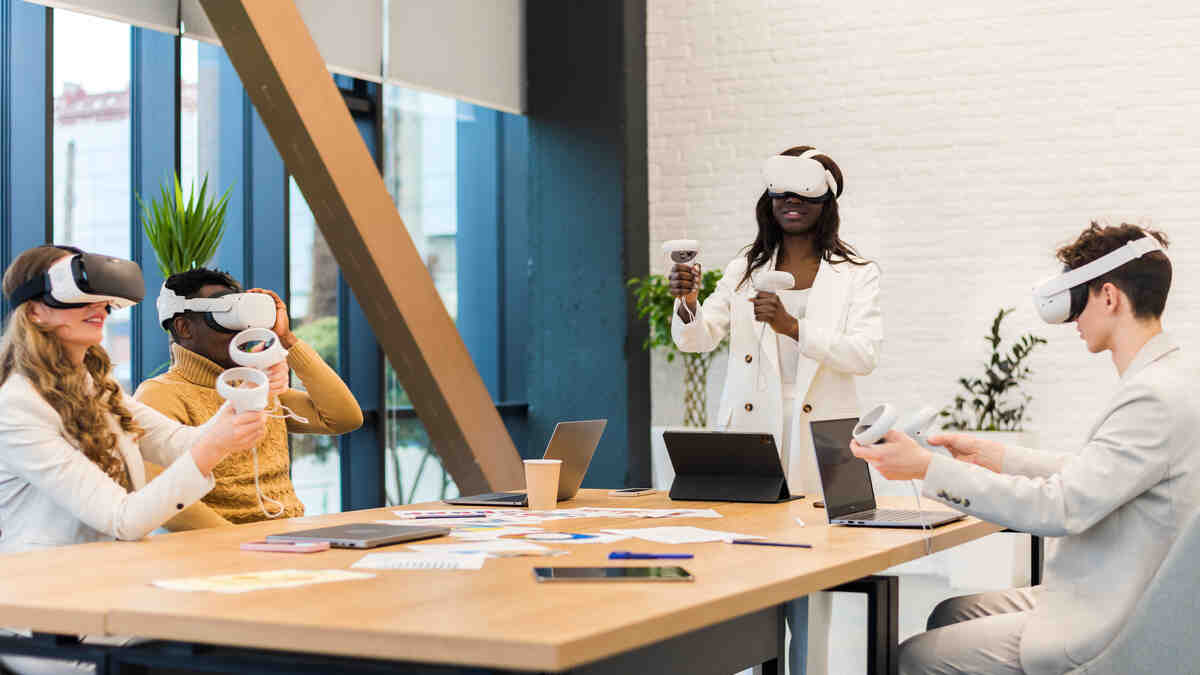
For example, a commercial real estate developer may use Virtual Reality to allow prospective tenants to walk through a building before construction is complete. A retail brand might create immersive showrooms where customers can experience products in simulated environments. Corporate teams can even collaborate inside virtual spaces that replicate real meeting rooms or visualize complex data in three dimensions.
What makes VR in business particularly powerful is its ability to bridge the gap between imagination and reality. Ideas that once required physical prototypes, costly mockups, or lengthy explanations can now be experienced instantly within a virtual environment.
As immersive technologies continue to evolve, businesses are discovering that the spaces they create—both physical and digital—play a crucial role in how people perceive their brand. In the next section, we’ll explore how experiential environments extend beyond VR alone, transforming ordinary commercial spaces into interactive destinations that engage customers, employees, and partners in entirely new ways.
What Are Experiential Environments?
As businesses adopt Virtual Reality and immersive technology in business, a broader concept is emerging: the rise of experiential environments. These are spaces intentionally designed to engage people through sight, sound, motion, and interaction rather than simply presenting information on static displays.
An experiential environment blends physical architecture with digital technology to create a space that people can actively experience. Instead of walking through a building as passive visitors, customers, employees, or guests become participants in an environment that responds to them.
In practical terms, this might include large-format video walls that change based on the event, interactive displays that respond to touch or movement, spatial audio that adapts to different zones within a space, or Virtual Reality experiences that allow visitors to explore a digital environment within a physical location. These elements work together to transform traditional interiors into environments that feel dynamic, immersive, and memorable.
The concept is gaining traction because modern audiences expect more than functional spaces. In retail, hospitality, and commercial real estate, environments increasingly serve as an extension of a brand’s identity. A thoughtfully designed experiential space can tell a story, highlight a product, or guide visitors through a curated journey.
This is where VR in business becomes particularly powerful. Virtual Reality allows organizations to extend the boundaries of physical space, creating environments that would otherwise be impossible to build. A hotel may use VR to showcase destinations and experiences before guests even book a stay. A corporate headquarters might create immersive briefing rooms where complex ideas can be visualized in three dimensions. Real estate developers can invite clients to explore properties that exist only as digital models.
However, VR is only one component of a larger ecosystem of immersive technology in business. Experiential environments often combine multiple technologies working together, such as:
Virtual Reality (VR) for fully immersive digital environments
Interactive projection systems that respond to movement or touch
Large-scale video walls and digital signage for visual storytelling
Spatial audio systems that create depth and atmosphere
Intelligent lighting systems that adapt to different moods and functions
Integrated automation and control systems that make the technology effortless to manage
When these technologies are integrated thoughtfully, they transform spaces into experiences rather than simple locations. A lobby can become a storytelling canvas. A retail showroom can feel like an interactive brand exhibition. A conference room can evolve into an immersive collaboration environment.
For businesses competing in commercial markets, the difference between a standard environment and an experiential one can be significant. A well-designed immersive space does more than look impressive—it encourages people to stay longer, engage more deeply, and form stronger connections with the brand behind the experience.
In the next section, we’ll explore why modern businesses are investing in immersive environments and how these technologies are shaping customer expectations across industries.
Why Modern Businesses Are Investing in Immersive Environments
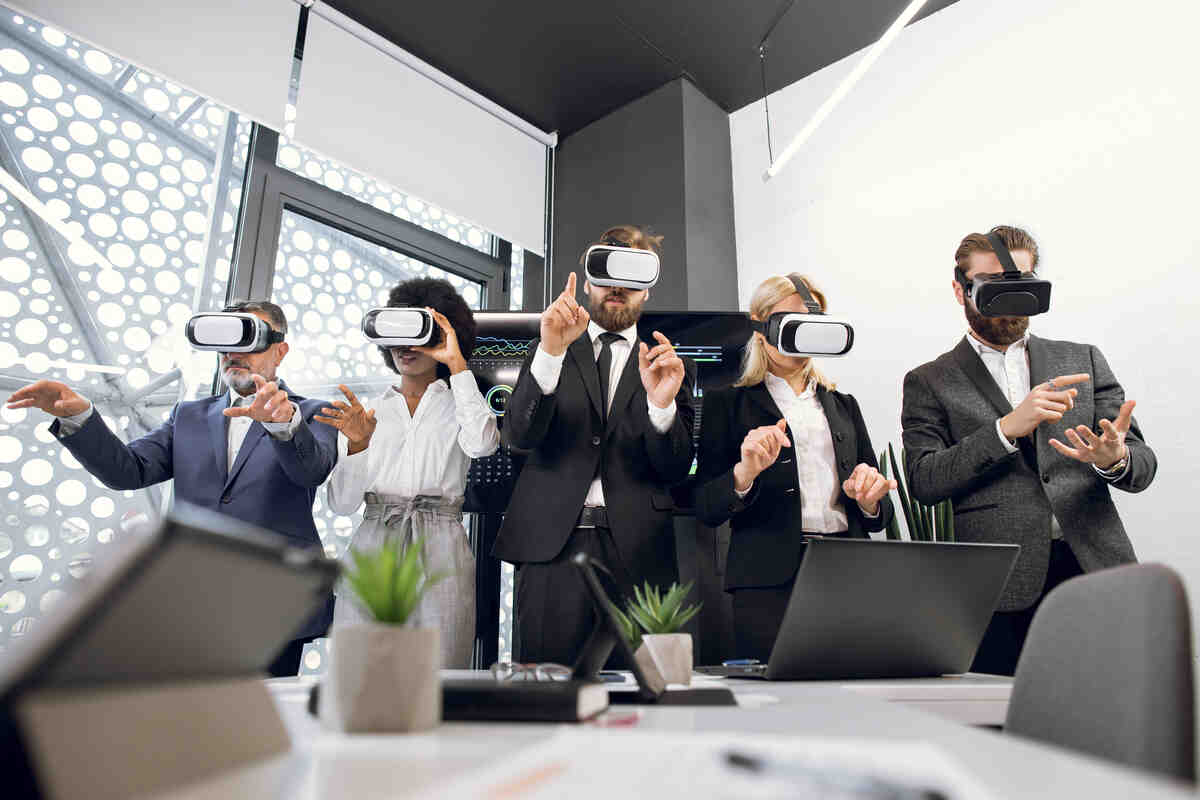
Across industries, businesses are rethinking how their physical spaces function. Offices, retail stores, hotels, and commercial properties are no longer designed solely for utility—they are becoming strategic tools for engagement, branding, and communication. As a result, immersive technology in business is gaining momentum as organizations look for ways to create environments that are both functional and memorable.
At the center of this transformation is Virtual Reality and a broader ecosystem of technologies that enable experiential environments. These tools allow companies to transform ordinary spaces into interactive destinations where customers, employees, and partners can engage with ideas and experiences in more meaningful ways.
Several key factors are driving this shift.
Rising Expectations for Customer Experience
Modern customers expect more than traditional service or static environments. Whether someone is visiting a retail showroom, attending a corporate event, or walking into a hotel lobby, the experience of the space itself now influences how they perceive the brand.
VR in business allows companies to create environments that capture attention and spark curiosity. Instead of simply presenting products or information, businesses can invite visitors to explore immersive experiences that make a lasting impression. These environments often encourage longer visits, deeper engagement, and stronger emotional connections with the brand.
Differentiation in Competitive Markets
In industries like hospitality, luxury retail, and commercial real estate, differentiation is essential. Two businesses may offer similar services, but the way their environments make people feel can dramatically influence customer choice.
Experiential environments give businesses a powerful way to stand out. A retail showroom might allow customers to step into a fully immersive product demonstration. A corporate lobby can become an interactive brand experience. A conference space can transform into a dynamic presentation environment that supports storytelling and collaboration.
By integrating immersive technology in business environments, organizations can create spaces that feel innovative and forward-thinking, reinforcing their reputation as leaders in their industry.
Stronger Engagement and Interaction
Traditional environments are passive. Visitors walk through, observe displays, and move on. Immersive environments change this dynamic by encouraging interaction.
With technologies such as Virtual Reality, motion-responsive projections, and interactive displays, users become active participants in the experience. They can explore products, visualize ideas, or interact with digital content in ways that feel natural and intuitive.
This level of engagement often leads to better information retention and a more memorable experience overall.
Improved Communication and Visualization
Complex ideas can be difficult to communicate using traditional presentations or static visuals. VR in business offers a powerful alternative by allowing people to experience concepts in three-dimensional environments.
For example, real estate developers can guide clients through virtual building designs before construction begins. Corporate teams can visualize data or prototypes in immersive environments that make abstract ideas easier to understand. Training programs can simulate real-world scenarios that help employees learn faster and more effectively.
By transforming information into interactive experiences, businesses can communicate ideas with greater clarity and impact.
Long-Term Strategic Value
While immersive technology often begins as a customer experience investment, many organizations quickly discover broader benefits. Experiential environments can improve collaboration, enhance internal communication, and create flexible spaces that support multiple uses—from presentations and training to events and demonstrations.
As technology becomes more integrated into architecture and interior design, immersive environments are evolving from novelty features into long-term strategic assets for commercial spaces.
In the next section, we’ll look at real-world applications of VR in business environments, exploring how industries such as retail, hospitality, corporate workplaces, and real estate are using immersive technology to reshape the way people experience modern spaces.
Real-World Applications of VR in Business Environments
As Virtual Reality and other immersive technologies mature, businesses are discovering practical ways to integrate them into everyday operations. What once felt experimental is now becoming a strategic tool for engagement, communication, and innovation. Across industries, VR in business is helping organizations transform their spaces into environments that inform, inspire, and connect people in new ways.
When integrated into experiential environments, VR can extend the capabilities of physical spaces, allowing businesses to showcase ideas, products, and experiences that go beyond traditional presentations.
Below are some of the most impactful ways immersive technology in business is being used today.
Hospitality and Hotels
In the hospitality industry, guest experience is everything. Hotels and resorts are increasingly exploring virtual reality to enhance how guests interact with their spaces and services.
For example, Virtual Reality can allow guests to preview destinations, explore resort amenities, or experience local attractions before booking. Within physical spaces, immersive installations can transform hotel lobbies, event venues, or lounges into visually engaging environments that create a strong first impression.
These environments help hospitality brands create memorable moments that reinforce their identity while encouraging guests to spend more time engaging with the space.
Retail and Brand Showrooms
Retail has evolved far beyond shelves and displays. Today, successful retail environments focus on storytelling and experience, inviting customers to interact with products rather than simply browsing them.
Through VR in business, retailers can create immersive product demonstrations, virtual fitting environments, or interactive showrooms where customers can explore products in realistic scenarios. A furniture brand, for instance, might allow visitors to step inside a virtual living space to see how different pieces look together.
These experiential environments turn retail locations into interactive brand experiences that encourage exploration, engagement, and longer visits.
Corporate Offices and Collaboration Spaces
Workplaces are also being reshaped by immersive technologies. As companies adapt to hybrid work models and more collaborative environments, immersive technology in business is helping organizations rethink how teams interact with ideas and each other.
VR-enabled environments can support immersive presentations, training simulations, or virtual collaboration spaces where teams visualize complex projects in three dimensions. Meeting rooms equipped with immersive displays and spatial audio can transform traditional presentations into dynamic, interactive sessions.
These environments allow companies to communicate ideas more clearly while fostering stronger collaboration across teams.
Real Estate and Architecture
In real estate and architectural design, visualization is essential. Traditionally, clients relied on blueprints, renderings, or scale models to understand what a finished space would look like. Today, Virtual Reality allows them to experience it directly.
Using VR in business, developers can guide clients through virtual walkthroughs of buildings that have not yet been constructed. Prospective tenants can explore office layouts, hotel designs, or retail spaces as if they were already built.
These immersive experiences help stakeholders make decisions with greater confidence while reducing the need for costly physical mockups.
Education, Healthcare, and Therapeutic Spaces
Beyond commercial applications, immersive technologies are also transforming learning and therapeutic environments. Educational institutions and healthcare facilities are increasingly adopting experiential environments to improve engagement and accessibility.
For example, immersive projection environments and VR-based experiences can support therapeutic programs, training simulations, or interactive learning activities. These technologies create environments that stimulate curiosity, encourage participation, and adapt to different needs.
In many cases, immersive environments can provide calming sensory experiences or interactive activities that support well-being and cognitive engagement.
Across all of these industries, the common theme is clear: spaces are becoming experiences. Businesses are no longer designing environments solely for function—they are designing them to communicate, engage, and inspire.
In the next section, we’ll explore the technology behind experiential business spaces, examining the systems and integrations that make these immersive environments possible.
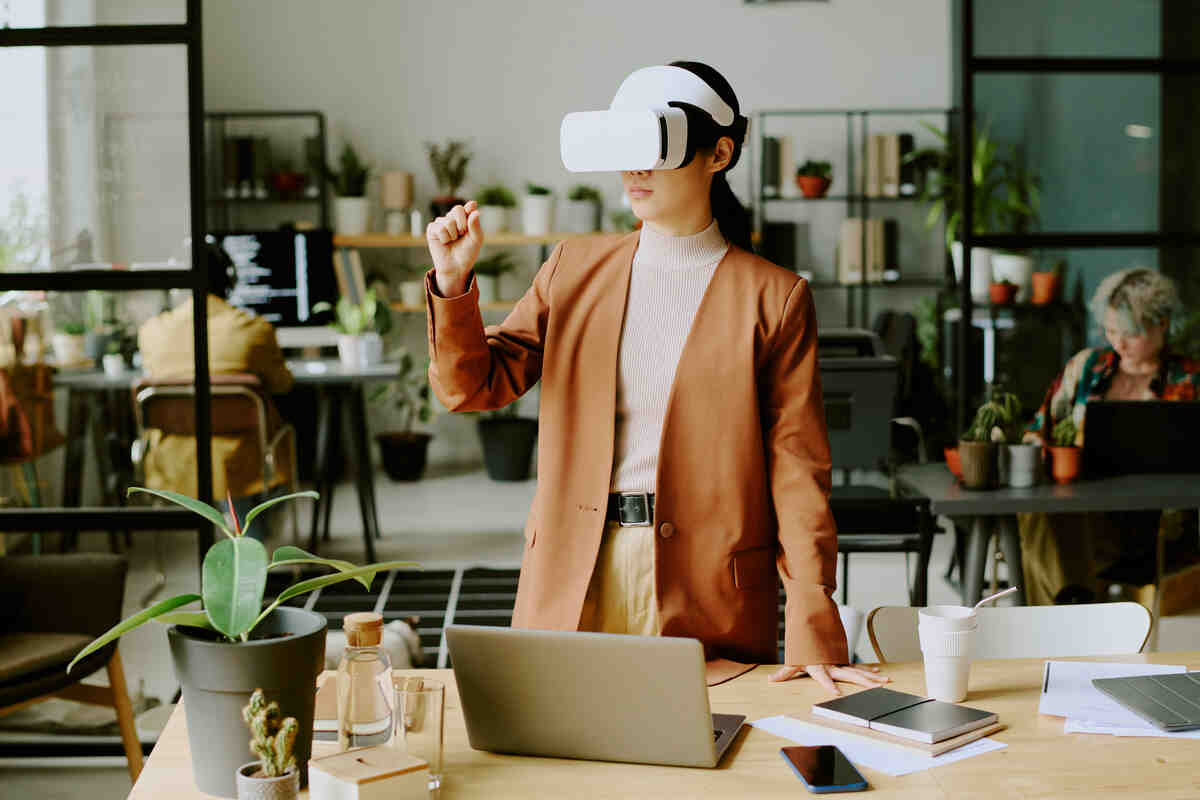
The Technology Behind Experiential Business Spaces
Behind every compelling experiential environment is a carefully designed ecosystem of technologies working together. While Virtual Reality often receives the most attention, immersive environments rarely rely on a single tool. Instead, they combine multiple systems that integrate seamlessly to create an engaging and intuitive experience.
For businesses adopting immersive technology in business, the goal is not simply to install impressive hardware. The real value comes from designing systems that work together to support the purpose of the space—whether that is collaboration, storytelling, customer engagement, or brand presentation.
When integrated effectively, these technologies transform commercial environments into dynamic, adaptable spaces.
Virtual Reality Systems
At the center of many immersive experiences is Virtual Reality itself. VR systems use headsets, motion tracking, and spatial computing to place users inside a fully simulated digital environment.
In a business context, VR in business can be used for product demonstrations, training simulations, virtual property walkthroughs, and immersive storytelling experiences. These environments allow users to explore ideas in ways that traditional presentations cannot match.
For example, a real estate developer might allow investors to walk through a building before construction begins, or a manufacturer might use VR to demonstrate how complex equipment operates.
Interactive Projection and Motion-Responsive Environments
Another powerful element of experiential environments is interactive projection technology. These systems project dynamic visuals onto floors, walls, or objects while responding to movement or touch.
When someone walks through the space, gestures toward a display, or interacts with projected elements, the environment responds in real time. This creates a sense of participation and discovery that encourages deeper engagement.
Interactive projection environments are especially effective in public spaces, educational facilities, museums, and experiential retail installations.
Video Walls and Digital Displays
Large-scale visual displays play a central role in many immersive commercial environments. Video walls and high-resolution digital displays allow businesses to transform walls, lobbies, and presentation spaces into dynamic visual canvases.
These systems can display real-time data, branded visuals, interactive content, or cinematic storytelling experiences. When combined with synchronized lighting and audio systems, video walls become a powerful tool for communication and engagement.
In corporate environments, they can support immersive presentations and collaboration. In hospitality or retail spaces, they can create dramatic visual moments that shape the overall atmosphere of the environment.
Spatial Audio Systems
Sound is a critical component of immersive environments, yet it is often overlooked. Spatial audio systems allow sound to move through a space in a controlled and intentional way, creating depth and realism.
For example, a presentation environment might direct audio toward specific seating areas while maintaining ambient sound throughout the room. In experiential environments, spatial audio can guide visitors through a narrative journey or reinforce visual elements within the space.
When integrated with Virtual Reality or interactive displays, spatial audio significantly enhances the sense of immersion.
Intelligent Lighting and Environmental Controls
Lighting also plays a major role in shaping how people experience a space. Intelligent lighting systems allow businesses to create different moods, highlight architectural features, or synchronize lighting with digital content.
For example, a conference room might shift from bright collaborative lighting during meetings to dramatic presentation lighting during events. Retail environments can adjust lighting to emphasize products or create specific atmospheres throughout the day.
Automation systems often connect lighting with other technologies, ensuring the environment adapts seamlessly to different uses.
Integrated Automation and Control Systems
One of the most important elements of immersive technology in business is integration. Without a unified control system, even the most advanced technology can become difficult to manage.
Integrated control platforms allow businesses to manage video, audio, lighting, climate, and other systems from a single interface. With one command, a room can transition from a presentation environment to an event space or from a training setup to an immersive demonstration.
This level of integration ensures that complex environments remain intuitive and effortless to operate, even when multiple technologies are involved.
When these technologies work together, they transform traditional interiors into environments that feel alive and responsive. Instead of simply housing activities, the space itself becomes part of the experience.
In the next section, we’ll explore the business benefits of VR-powered experiential environments, including how immersive spaces can strengthen customer engagement, improve communication, and create long-term value for commercial organizations.
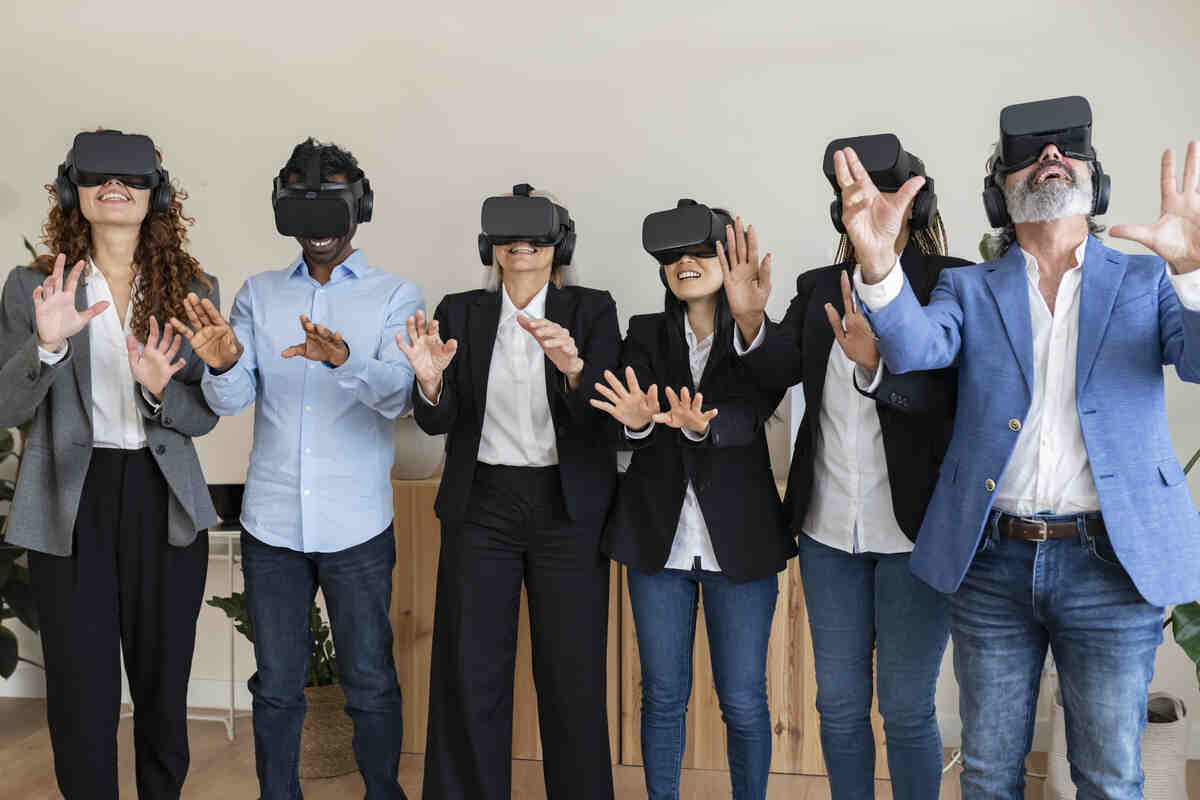
The Business Benefits of VR-Powered Experiential Environments
As organizations explore Virtual Reality and other immersive systems, the most important question is not whether the technology is impressive—it’s whether it creates meaningful business value. When implemented thoughtfully, VR in business and other forms of immersive technology in business can deliver tangible benefits that extend far beyond visual impact.
Experiential spaces are designed to influence how people feel, interact, and remember a brand. For companies operating in competitive industries such as hospitality, retail, commercial real estate, and corporate services, these environments can become powerful strategic assets.
Stronger Customer Engagement
Traditional environments often rely on passive communication. Customers observe displays, listen to presentations, or read signage, but their level of interaction is limited.
Experiential environments change this dynamic by inviting people to participate in the experience itself. Through Virtual Reality, interactive displays, and responsive digital environments, visitors can explore products, ideas, or services in ways that feel personal and engaging.
This level of interaction naturally encourages visitors to spend more time within a space. The longer people remain engaged, the more likely they are to form a memorable connection with the brand behind the experience.
Elevated Brand Perception
The environments a business creates communicate powerful messages about its identity. A thoughtfully designed immersive space signals innovation, sophistication, and forward thinking.
By incorporating VR in business environments, companies demonstrate that they are willing to invest in cutting-edge experiences that prioritize both functionality and design. For brands, commercial properties, and hospitality venues, this perception can significantly influence how clients and guests evaluate the organization.
When a space feels modern, intelligent, and immersive, visitors often associate those qualities with the brand itself.
Improved Communication and Decision-Making
Complex ideas can be difficult to communicate through traditional presentations or static visuals. This is where immersive technology in business becomes particularly valuable.
Using Virtual Reality, teams can visualize architectural designs, engineering concepts, or strategic plans in three dimensions. Stakeholders are no longer required to interpret abstract diagrams or renderings—they can experience the concept directly.
This ability to step inside an idea often accelerates decision-making and reduces misunderstandings between stakeholders, designers, and clients.
Enhanced Training and Knowledge Retention
Training programs benefit significantly from immersive environments. Traditional learning methods often rely on lectures, manuals, or video demonstrations, which can limit engagement and retention.
With VR in business, organizations can create simulated environments where employees practice real-world scenarios. Whether it involves equipment training, emergency preparedness, or customer interaction simulations, immersive training experiences tend to improve focus and knowledge retention.
Because employees learn by doing rather than simply observing, the information becomes easier to recall and apply in real situations.
New Revenue and Experience Opportunities
In many industries, experiential environments create entirely new opportunities for business growth. Retail spaces can host immersive product demonstrations or interactive brand experiences. Hospitality venues can offer unique entertainment environments that attract visitors and events. Corporate facilities can host presentations or showcases that would be impossible in traditional spaces.
These experiences not only strengthen brand identity but can also become revenue-generating assets, especially when businesses use immersive environments for events, product launches, or interactive exhibitions.
Long-Term Strategic Value
While immersive technologies often begin as a way to improve customer experience, their long-term value lies in flexibility and adaptability. Environments designed with integrated systems can evolve as technology advances or business needs change.
For example, a space initially designed for immersive presentations might later support hybrid events, digital exhibitions, or collaborative work environments. With the right infrastructure, the technology continues to deliver value long after the initial installation.
Ultimately, VR in business and experiential environments is not just about technology—it is about creating spaces that communicate ideas, inspire interaction, and strengthen relationships between organizations and the people they serve.
In the next section, we’ll examine common mistakes businesses make when implementing immersive technology and how thoughtful planning can ensure these environments deliver their full potential.
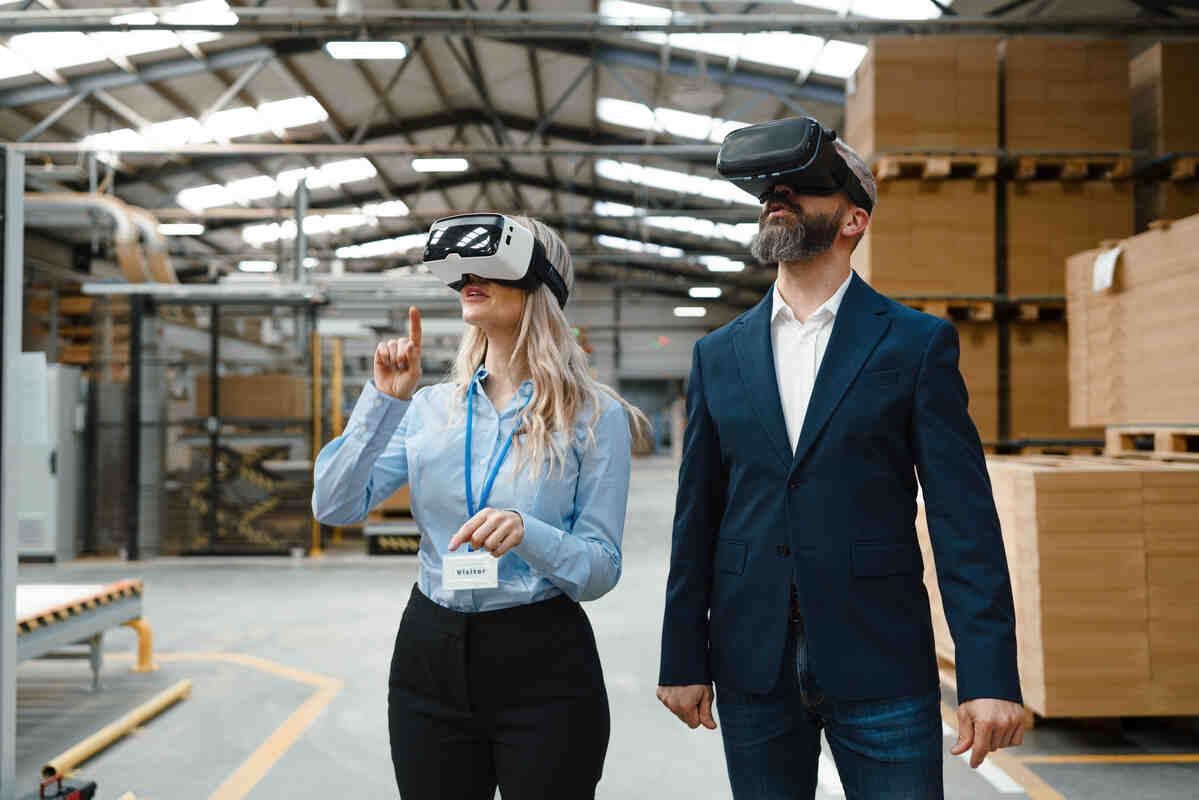
Common Mistakes Businesses Make With Immersive Technology
As interest in Virtual Reality and immersive technology in business continues to grow, many organizations rush to adopt these tools without fully considering how they fit into their broader environment. While the potential of VR in business is significant, the success of an immersive space depends heavily on thoughtful planning, design, and integration.
When businesses focus only on the novelty of the technology rather than the experience it creates, immersive environments can fall short of expectations. Understanding the most common mistakes helps organizations approach experiential environments with a clearer strategy and stronger long-term results.
Treating Technology as the Experience
One of the most frequent mistakes is assuming that installing advanced technology automatically creates an immersive environment. In reality, hardware alone does not produce meaningful engagement.
A successful experiential environment begins with a clear vision of the experience the business wants to create. Technology should support that vision, not define it. For example, a retail showroom may use Virtual Reality to help customers explore product variations, but the true goal is helping customers understand and connect with the product—not simply showcasing the VR headset itself.
When businesses prioritize the experience first, the technology becomes a natural extension of the environment rather than a disconnected feature.
Focusing on Individual Devices Instead of the Whole Environment
Another common challenge occurs when businesses install individual technologies without integrating them into a unified system. A room might contain impressive displays, projection systems, or VR equipment, but if those tools operate independently, the overall experience can feel fragmented.
Immersive technology in business works best when systems are designed to function together. Lighting, audio, displays, and control systems should operate as part of a cohesive ecosystem that adapts seamlessly to the purpose of the space.
Without this integration, staff may struggle to manage the environment, and visitors may never experience the full potential of the technology.
Overlooking Ease of Use for Staff and Guests
Even the most advanced immersive environment can fail if it is difficult to operate. Businesses sometimes implement complex systems that require technical expertise, leaving employees frustrated or hesitant to use the technology.
For VR in business environments to succeed, the technology must feel intuitive and reliable. Staff should be able to activate presentations, adjust environments, or guide visitors through experiences with minimal effort. When the system becomes effortless to manage, the focus returns to the experience rather than the mechanics behind it.
Ignoring the Role of Architecture and Design
Technology does not exist in isolation. The physical design of a space plays a critical role in how immersive an environment feels.
Lighting placement, acoustics, sightlines, and architectural layout all influence how visitors experience Virtual Reality and other immersive systems. If these elements are not considered during the design phase, even advanced technology may struggle to deliver the intended impact.
Successful experiential environments are created through collaboration between technology specialists, architects, designers, and business stakeholders. This collaborative approach ensures that technology enhances the space rather than competing with it.
Failing to Plan for Future Growth
Technology evolves quickly, and immersive environments must be designed with flexibility in mind. Businesses sometimes invest in systems that work well initially but lack the infrastructure needed to support future upgrades or expansions.
When organizations adopt immersive technology in business, it is important to consider how the environment might evolve. A space designed for VR demonstrations today may later support interactive events, hybrid collaboration, or new forms of digital engagement.
Planning for scalability ensures that immersive environments remain valuable long after the initial installation.
Avoiding these common pitfalls allows businesses to unlock the full potential of Virtual Reality, VR in business, and experiential environments. When immersive technologies are implemented with a clear strategy, integrated systems, and thoughtful design, they can transform commercial spaces into powerful tools for communication, engagement, and innovation.
In the next section, we’ll explore how businesses can design experiential environments that truly work, focusing on the principles that help immersive spaces deliver lasting value.
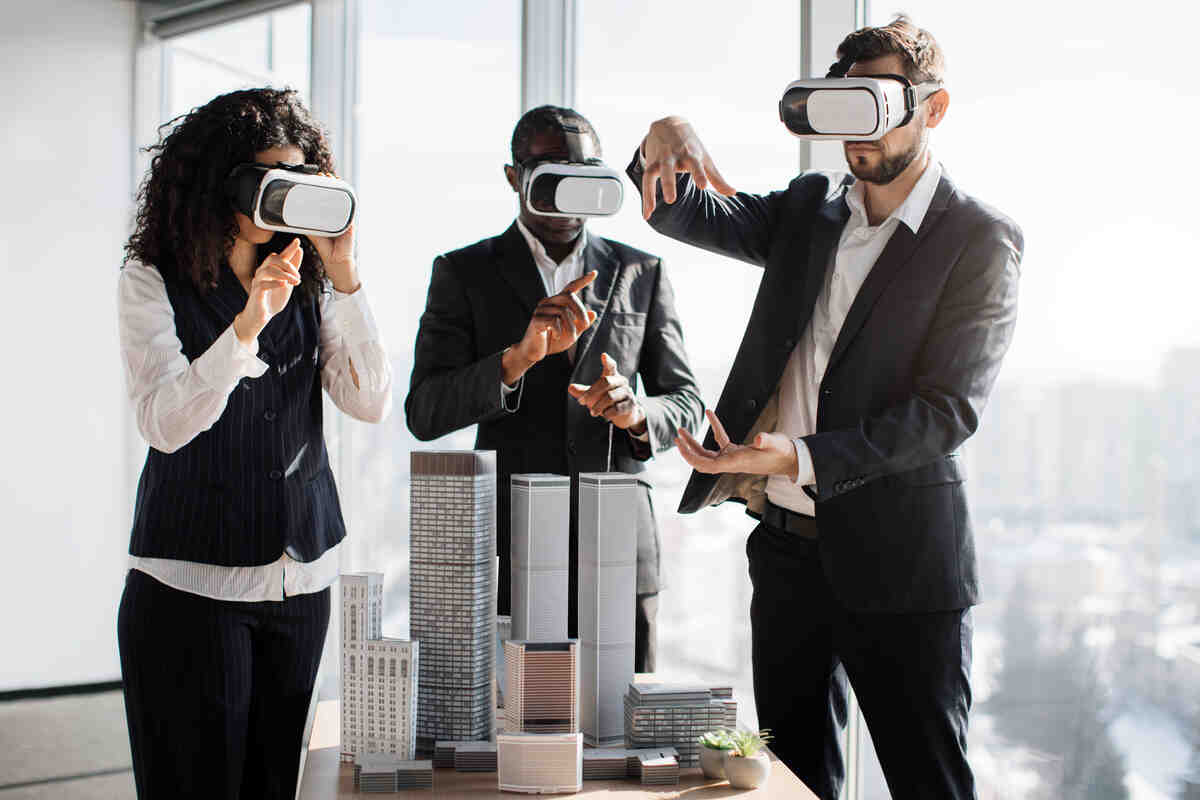
Designing Experiential Environments That Actually Work
Creating successful experiential environments requires more than installing advanced technology. The most effective spaces are designed with a clear understanding of how people interact with environments, how businesses communicate their brand, and how technology can enhance those interactions without becoming intrusive.
When organizations approach VR in business and other immersive systems strategically, the result is a space that feels intuitive, engaging, and purposeful. Instead of overwhelming visitors with technology, the environment guides them through an experience that feels seamless and natural.
Several principles help ensure that Virtual Reality and other forms of immersive technology in business deliver meaningful results.
Start With the Experience, Not the Technology
The first step in designing an immersive environment is defining the experience you want people to have. Businesses should ask simple but important questions:
What should visitors feel when they enter the space?
What story should the environment communicate?
What actions should people take within the space?
For example, a hospitality brand might want guests to feel welcomed and intrigued as soon as they enter the lobby. A corporate environment may aim to foster collaboration and innovation. A retail showroom may want customers to explore products in a memorable way.
Once the experience is defined, technologies like Virtual Reality, interactive displays, and immersive audio can be selected to support that vision.
Integrate Technology With Architecture and Design
The most successful experiential environments feel like a natural extension of the space rather than an added layer of equipment. This requires close collaboration between architects, designers, and technology specialists during the planning phase.
Lighting, acoustics, sightlines, and spatial layout all influence how immersive technologies perform. For instance, a VR experience may work best in a quiet, controlled area of a space, while interactive video walls may become a focal point in a lobby or presentation environment.
When immersive technology in business is integrated with architectural design, the technology enhances the environment without disrupting the aesthetic of the space.
Prioritize Simplicity and Intuitive Control
One of the defining characteristics of well-designed immersive spaces is that they feel effortless to use. Visitors should not need instructions to understand how to interact with the environment, and staff should be able to operate systems without technical complexity.
Integrated control systems play a key role in achieving this simplicity. With unified controls, lighting, audio, displays, and VR in business environments can be managed through a single interface. A room can shift from presentation mode to demonstration mode with a single command.
This level of intuitive control ensures that technology enhances the experience rather than creating operational challenges.
Design for Flexibility and Future Innovation
Technology evolves quickly, and immersive spaces must be able to adapt over time. Businesses that invest in Virtual Reality and other immersive systems should consider how the environment might be used in the future.
A space designed for immersive presentations today may later support hybrid events, digital exhibitions, collaborative work sessions, or interactive product launches. By planning infrastructure carefully—such as network capacity, display systems, and automation platforms—organizations can ensure their environments remain adaptable.
Flexible environments protect long-term investments and allow businesses to continue evolving their experiences as new technologies emerge.
Focus on Reliability and Consistency
For VR in business and other immersive technologies to deliver value, they must perform reliably every time the space is used. An immersive environment that works flawlessly during a demonstration but fails during an important client visit can undermine confidence.
Reliable systems, thoughtful engineering, and consistent user experiences across rooms or locations help ensure immersive environments remain assets rather than liabilities. Businesses that prioritize stability and ease of maintenance often see stronger long-term adoption of their immersive spaces.
When these principles come together, experiential environments become far more than technology showcases. They evolve into intelligent spaces that support communication, inspire engagement, and reflect the vision of the organizations that use them.
In the next section, we’ll explore the future of VR in business environments, examining how emerging technologies and new design approaches are shaping the next generation of immersive commercial spaces.
The Future of VR in Business Environments
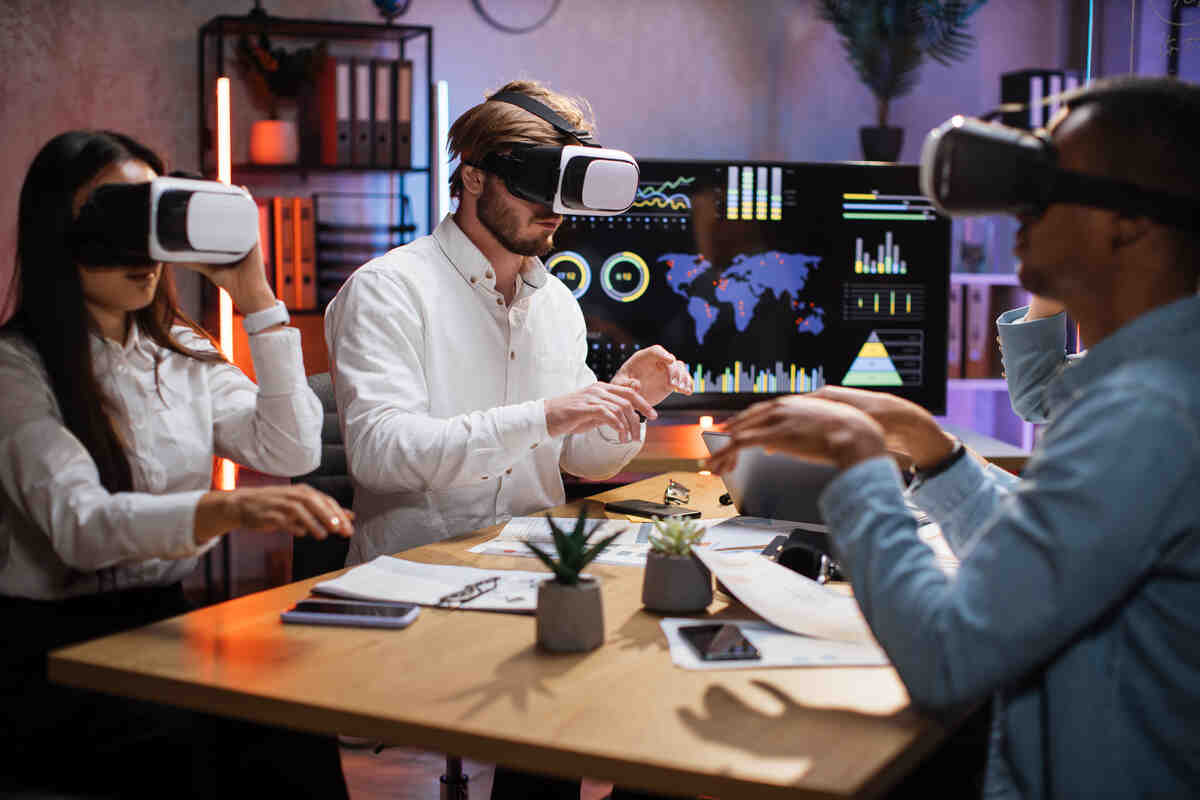
As technology continues to evolve, Virtual Reality is moving beyond experimental demonstrations and becoming an integral part of how modern spaces are designed and experienced. What began as a niche technology for gaming and entertainment is now emerging as a powerful tool for communication, collaboration, and spatial storytelling.
The growing adoption of VR in business reflects a broader shift in how organizations think about physical environments. Offices, retail spaces, hotels, and commercial developments are no longer static locations—they are becoming dynamic platforms where digital and physical experiences blend together.
Looking ahead, several trends are shaping the future of experiential environments and the role of immersive technology in business.
The Rise of Spatial Computing
One of the most significant developments influencing immersive environments is spatial computing. This technology allows digital content to exist within physical space, interacting with real-world objects and environments.
Instead of viewing digital content on flat screens, spatial computing enables businesses to place interactive visuals, data, and simulations directly within a room. Users can move around these elements, interact with them, and experience information in three dimensions.
When combined with Virtual Reality, spatial computing allows organizations to create environments where digital layers enhance physical architecture. This shift will make immersive spaces more natural and intuitive to use.
Hybrid Physical–Digital Environments
The future of VR in business is not limited to fully virtual spaces. Increasingly, immersive experiences combine physical environments with digital enhancements.
For example, a conference room may incorporate interactive displays, immersive audio, and environmental controls alongside VR experiences that allow teams to step into virtual simulations. A retail showroom might blend physical products with virtual demonstrations that show how those products perform in different scenarios.
These hybrid environments allow businesses to create experiences that are both tangible and interactive, strengthening the connection between digital content and real-world spaces.
Immersive Collaboration and Remote Presence
As remote work and distributed teams become more common, businesses are exploring immersive technologies to enhance collaboration. Virtual Reality can create shared digital environments where teams interact with each other and with virtual objects in real time.
These environments allow participants to visualize complex data, review architectural designs, or collaborate on product concepts in ways that traditional video conferencing cannot replicate.
For organizations operating across multiple locations, immersive collaboration environments can help teams communicate ideas more clearly and build stronger connections despite physical distance.
Intelligent, Responsive Environments
Future experiential environments will become increasingly responsive to the people using them. Advances in sensors, artificial intelligence, and automation are enabling environments that adapt dynamically to user behavior.
Lighting may adjust automatically based on activity within a room. Digital displays might change content depending on who enters the space. Interactive installations could respond to movement, voice commands, or gestures.
These responsive environments make technology feel less like a tool and more like a natural extension of the space itself.
The Evolution of Commercial Space Design
As immersive technology in business becomes more widely adopted, architects and designers are beginning to incorporate it into the earliest stages of building design. Rather than adding technology after construction, immersive systems are being integrated directly into the architecture of modern spaces.
This approach allows technology to enhance the aesthetics and functionality of a building rather than competing with its design. Lighting systems, display surfaces, acoustic treatments, and automation infrastructure can all be planned as part of a cohesive environment.
The result is a new generation of commercial spaces where Virtual Reality, interactive environments, and integrated audiovisual systems are built into the foundation of the experience.
The future of VR in business is not just about more advanced technology—it is about reimagining how environments communicate, engage, and inspire. As immersive tools become more accessible and sophisticated, businesses that embrace experiential environments will have new opportunities to create meaningful interactions with customers, employees, and partners.
Why Virtual Reality Will Define the Next Generation of Business Spaces
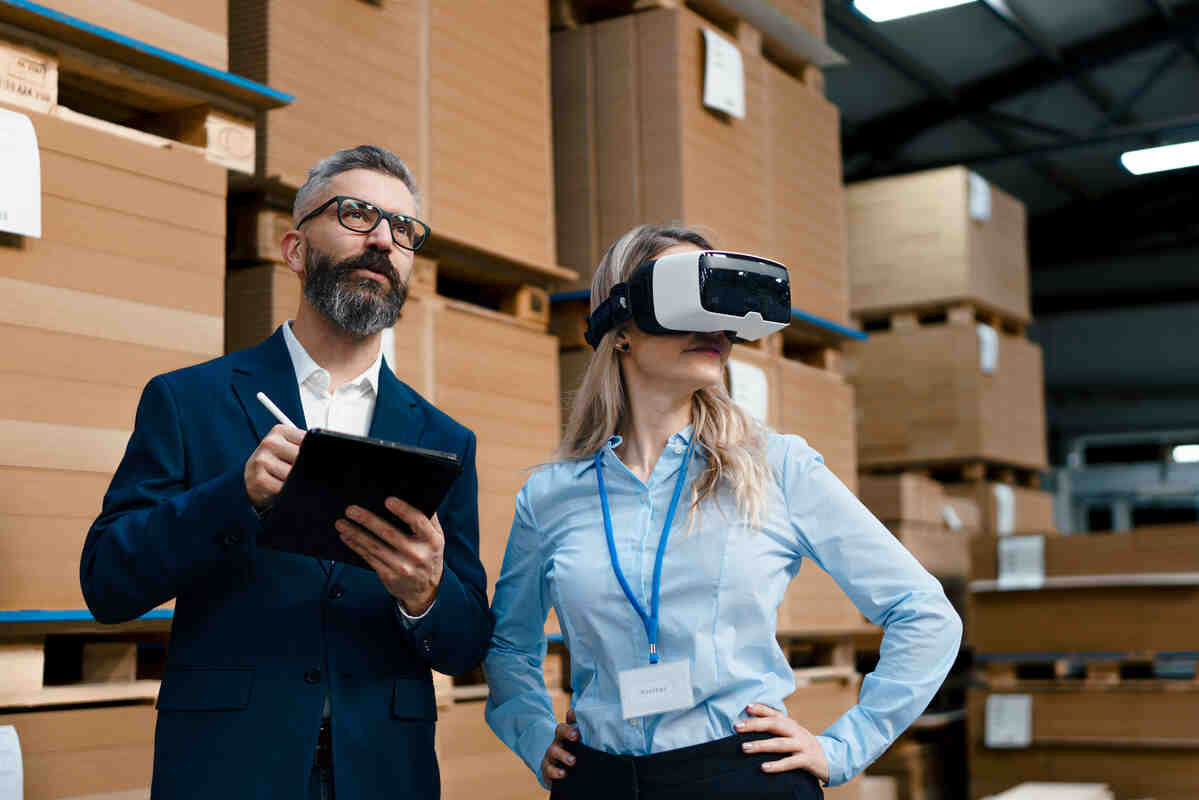
The way businesses design their environments is changing rapidly. Offices, retail spaces, hotels, and commercial properties are no longer defined only by their architecture or location. Increasingly, they are defined by the experiences they create. As expectations evolve, Virtual Reality is emerging as one of the technologies that will shape the next generation of business spaces.
For many organizations, VR in business represents a new way to communicate ideas, demonstrate products, and engage people within a space. Instead of relying on static presentations or traditional displays, companies can invite clients, customers, and employees to step inside immersive experiences that make information easier to understand and more memorable.
Sphere Audio Video specializes in creating intelligent audiovisual environments that elevate how businesses present, collaborate, and engage with their customers. From immersive presentation spaces to integrated commercial AV systems, the right technology can turn an ordinary space into a powerful experience.
To learn how immersive technology can enhance your business environment, call Sphere Audio Video at (205) 777-5626 to start a conversation about your space and your vision.