
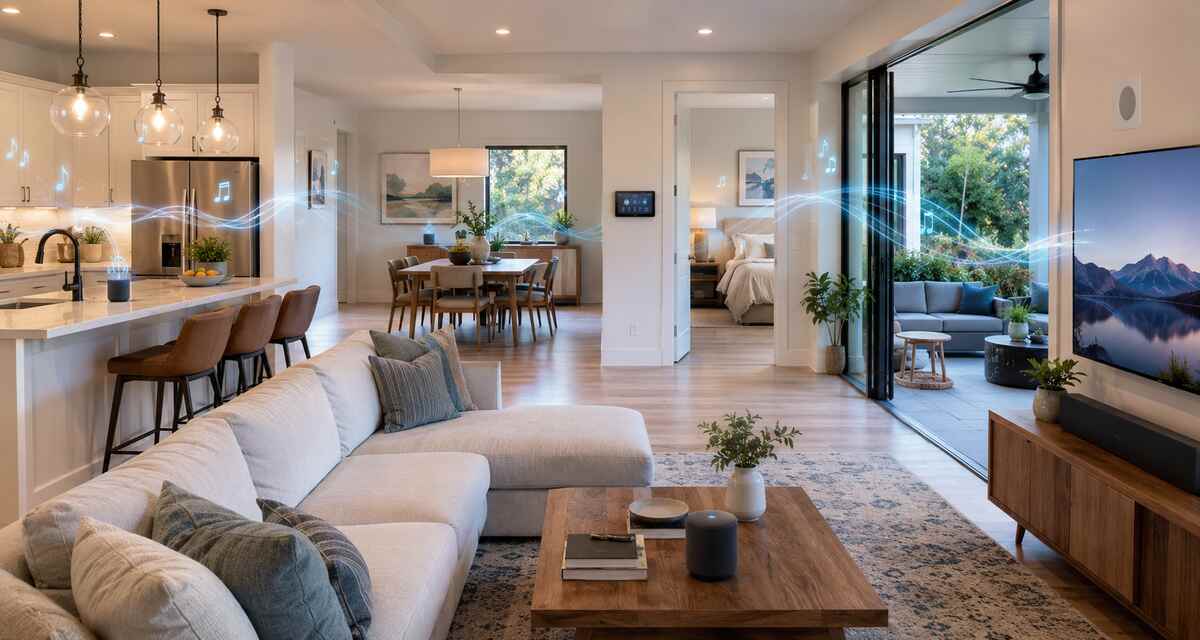
Where Music Follows You Like Air: A Guide to Whole Home Audio Systems
Music has a way of changing how a home feels. It can bring energy to a busy morning, soften the pace of an evening, or turn a simple gathering into something memorable. Yet in many homes, listening still depends on moving portable speakers, reconnecting devices, adjusting separate systems, or losing the sound entirely as soon as you walk into another room.
A thoughtfully designed whole home audio system removes that friction. Instead of treating music as something tied to a single speaker or space, it allows sound to move naturally throughout the home. A song can begin in the kitchen, continue through the living room, and follow you onto the patio without interruption.
The best systems do more than place speakers in multiple rooms. They create a consistent listening experience while respecting the architecture, interior design, and daily rhythms of the people who live there. Speakers can blend into ceilings and walls, equipment can remain out of sight, and control can be reduced to a simple app, touchscreen, voice command, or programmed scene.
For homeowners, this balance matters. Technology should not compete with the design of the home or require constant attention. It should operate quietly in the background, ready when needed and nearly invisible when it is not.
That is the real promise of whole home audio: not simply more speakers, but music that feels naturally present wherever life is happening. This guide explains how whole home audio systems work, the choices involved in designing one, and what separates a collection of connected devices from a truly integrated listening experience.
What Is a Whole Home Audio System?
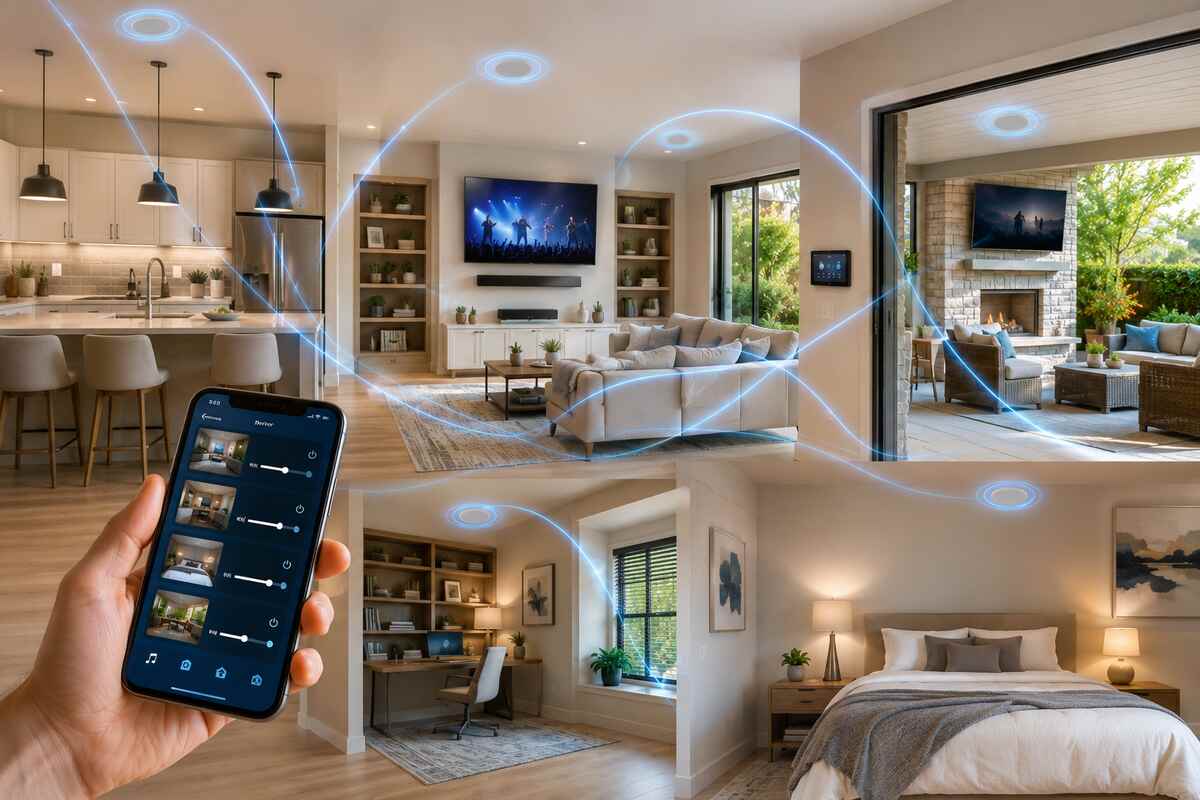
A whole home audio system is a connected network of speakers, audio sources, amplifiers, and controls designed to deliver music across multiple rooms or outdoor areas. Instead of managing a separate speaker in every space, homeowners can control the listening experience from one coordinated system.
These systems are also described as whole house audio, multi-room audio, or distributed audio. Although the terms are often used interchangeably, they all refer to the same basic idea: music can be distributed throughout the home while each area remains easy to control.
A single room or group of rooms is typically treated as an audio zone. One zone might include the kitchen and breakfast area, while another might cover the primary bedroom, patio, or home gym. Each zone can usually be turned on or off independently, adjusted to its own volume, or assigned a different source.
For example, one person might listen to a podcast in the kitchen while someone else plays music in the office. During a gathering, those same zones can be grouped so the same playlist flows through the living areas and continues outdoors.
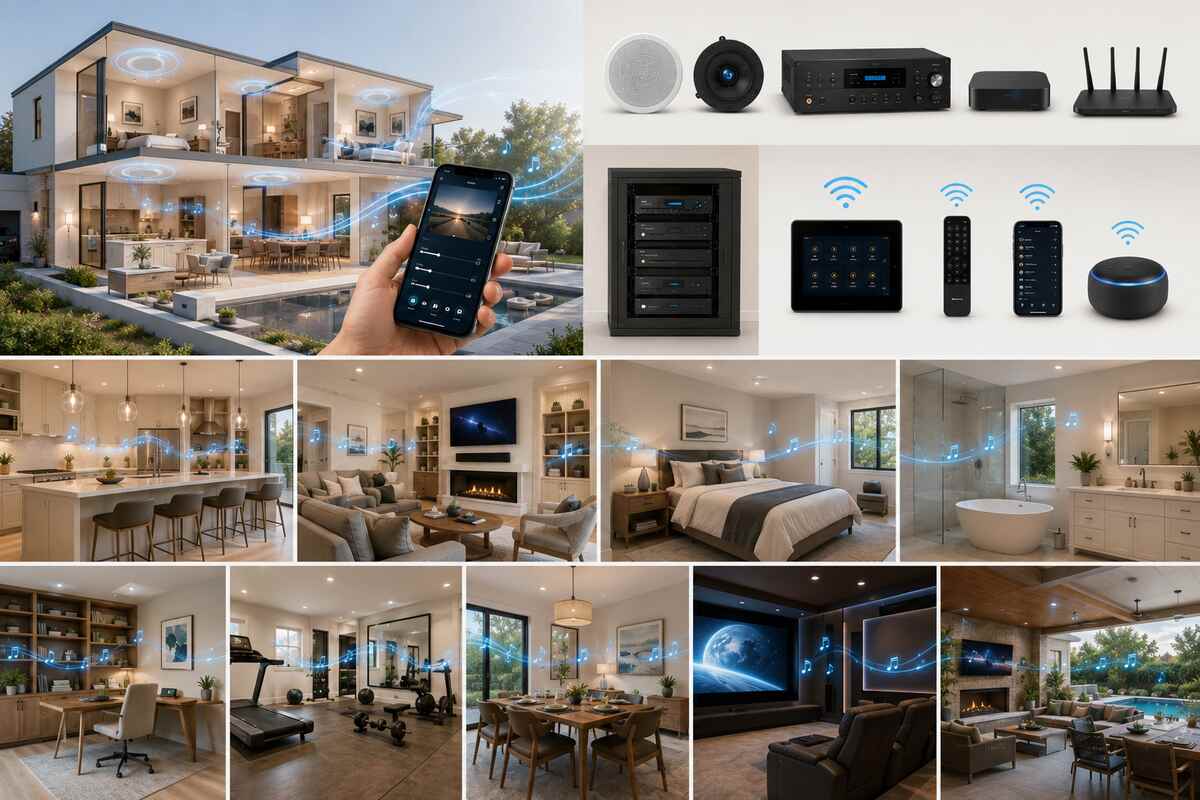
A whole home audio system generally includes several core elements:
Speakers installed or positioned throughout the property
Amplification that provides power to each audio zone
Music sources, such as streaming services, television audio, or a personal library
A reliable home network for communication and control
An interface, such as an app, touchscreen, keypad, remote, or voice assistant
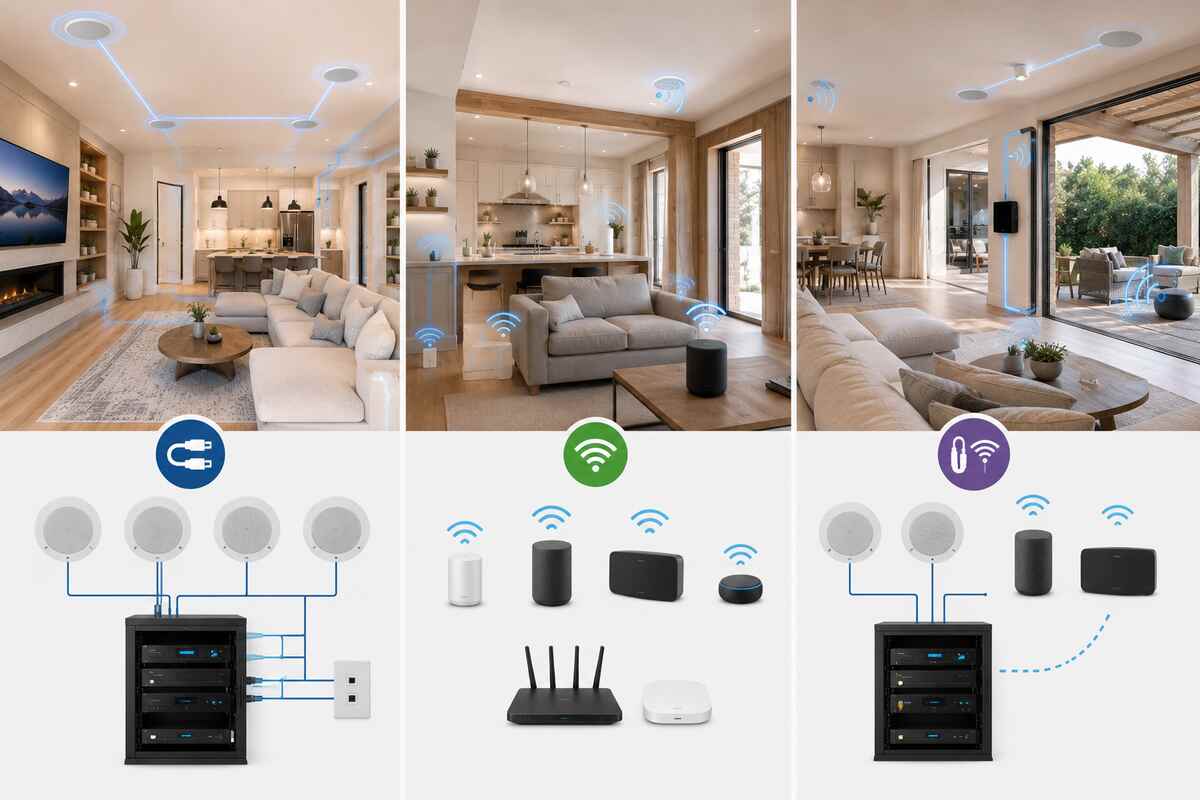
The system may be wired, wireless, or built with a combination of both. Wired systems are often preferred in new construction or major renovations because cabling can be planned before walls and ceilings are finished. Wireless systems can provide more flexibility in existing homes, although their performance depends heavily on network quality and equipment compatibility.
What separates a professionally planned whole home audio system from a collection of independent speakers is coordination. The speakers, controls, network, and amplification are designed to work together, creating an experience that feels consistent from one space to the next.
The result is not simply music in more rooms. It is a home where audio becomes part of the environment—available wherever it is wanted, controlled without unnecessary effort, and integrated without disrupting the design of the space.
How Does a Whole Home Audio System Work?
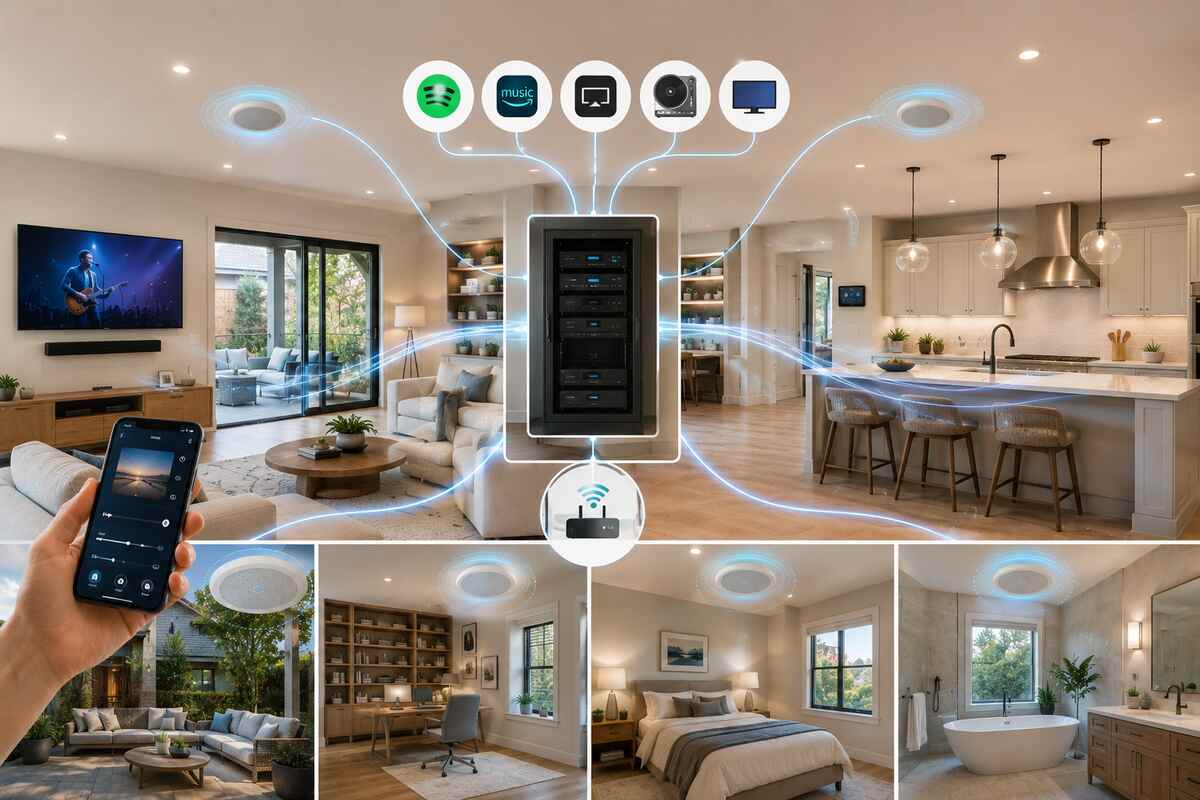
A whole home audio system works by connecting music sources, control devices, amplification, speakers, and the home network into one coordinated system. Each part has a specific role, but the experience should feel simple: choose what you want to hear, select where you want to hear it, and press play.
The easiest way to understand the system is to follow the path the audio takes.
1. The Music Begins at the Source
The source is where the audio originates. In most modern systems, this includes streaming services, internet radio, podcasts, stored music libraries, turntables, televisions, or other connected devices.
A well-designed system can make several sources available throughout the home. This gives family members the freedom to listen to different content in different spaces without relying on a single phone or portable speaker.
2. The System Receives the Command
The homeowner controls the system through an interface such as a mobile app, wall-mounted touchscreen, keypad, handheld remote, or voice assistant. From there, they can select a source, choose one or more rooms, adjust the volume, or group several zones together.
The control layer is especially important because even excellent audio equipment can become frustrating when it requires too many apps or complicated steps. The system should make everyday actions feel immediate and intuitive.
3. The Audio Is Directed to the Correct Zone
Once a source and listening area are selected, the system routes the audio to the appropriate zone. A zone may be a single room, several connected spaces, or an outdoor area.
This zoning structure makes the system flexible. The kitchen and patio can play the same playlist during a gathering, while the office remains quiet. At another time, each space can operate independently.
4. Amplifiers Power the Speakers
Most architectural speakers require an amplifier to produce sound. The amplifier receives the audio signal, increases its power, and sends it to the speakers assigned to each zone.
In a centralized system, the amplifiers and related equipment may be housed in a dedicated rack away from the main living areas. This keeps visible equipment to a minimum while making the system easier to organize, maintain, and expand.
5. The Speakers Deliver the Experience
The speakers are the final point in the signal path, but their performance depends on much more than the speaker model alone. Placement, room size, ceiling height, furnishings, acoustics, and listening expectations all influence how the system should be designed.
A kitchen used for casual background music has different requirements from a great room intended for entertaining or a dedicated listening area. The goal is not to make every room sound identical. It is to give each space the right level of coverage, clarity, and control for the way it is used.
6. The Network Keeps Everything Connected
Many modern whole home audio systems depend on the home network for communication, streaming, synchronization, software updates, and control. A weak or poorly planned network can cause delayed commands, interrupted playback, or rooms falling out of sync.
For that reason, network design is not separate from audio design. It is part of the foundation. Reliable Wi-Fi, correctly placed access points, wired connections where appropriate, and sufficient bandwidth all help the system perform consistently.
A Simple Example
Imagine selecting a playlist from a wall-mounted touchscreen before guests arrive. You choose the kitchen, dining room, living room, and patio, then set each area to a comfortable volume.
The command travels through the control system, the music source begins streaming, the audio is routed to the selected zones, and the amplifiers power the speakers in each space. The same music remains synchronized as guests move through the home, while less active areas stay quiet.
The homeowner does not need to think about signal paths, equipment racks, networking, or amplification. All of that complexity remains behind the scenes. What they experience is simply music appearing where they want it, when they want it.
Why More Homeowners Are Choosing Whole Home Audio
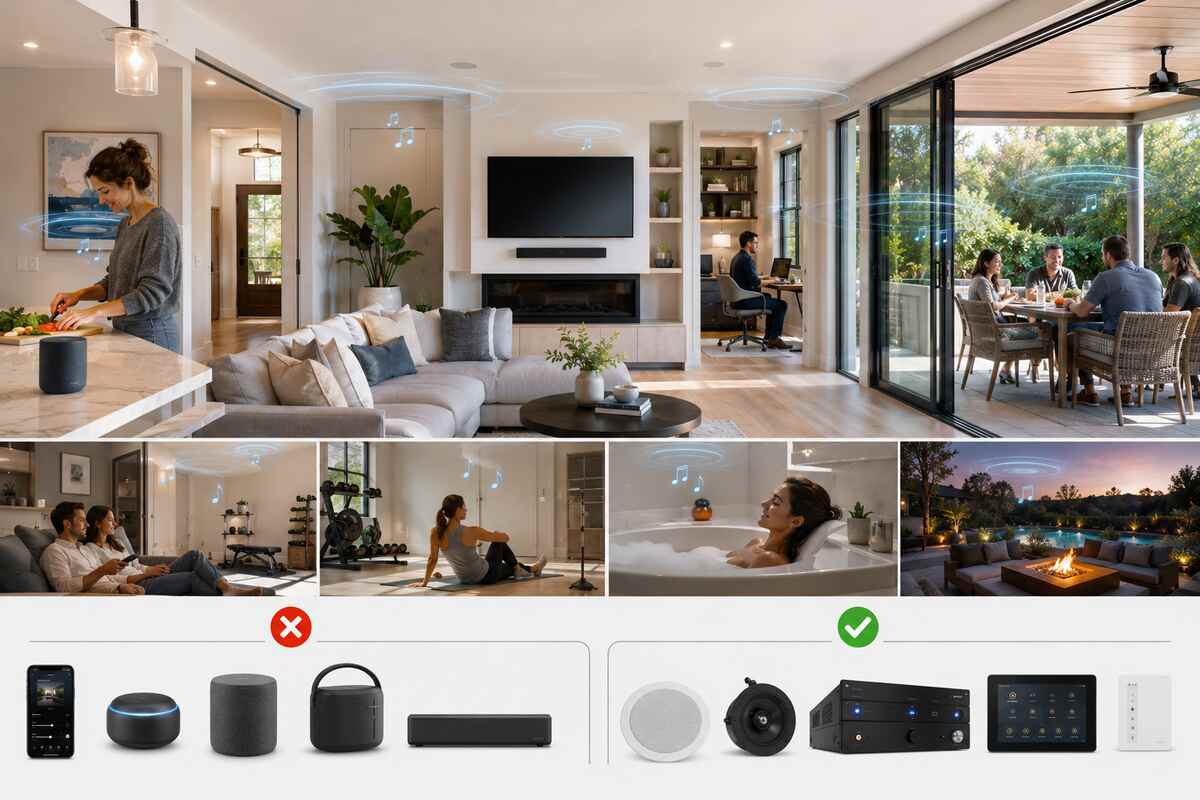
Homeowners are choosing whole home audio because it makes music easier to enjoy throughout daily life. Instead of managing separate speakers, reconnecting devices, or losing the sound when moving between rooms, they can create one coordinated listening experience across the home.
Each area can still operate independently. One person might listen to a podcast in the kitchen while someone else plays music in the home office. When guests arrive, several rooms and outdoor spaces can be grouped so the same playlist follows the gathering naturally.
Whole home audio also supports thoughtful interior design. In-ceiling, in-wall, and hidden speakers can deliver clear, balanced sound without placing visible equipment in every room. Amplifiers and other components can remain in a centralized location, keeping living spaces clean and uncluttered.
When integrated with home automation, audio can also become part of everyday scenes. A morning setting might begin a playlist as the shades open, while an entertaining scene could coordinate music, lighting, and outdoor spaces with one command.
The appeal is not simply having more speakers. It is creating a home where music is always available, easy to control, and naturally suited to the way people live.
Whole Home Audio vs. Wireless Speakers
Wireless speakers are a convenient way to add music to one or two rooms. A whole home audio system is designed for a different purpose: creating consistent, coordinated sound throughout an entire property.
Portable Bluetooth speakers usually depend on a nearby phone or tablet. Smart speakers and wireless multi-room products offer more flexibility, but they can still introduce visible equipment, charging requirements, network limitations, and separate control experiences.
A professionally designed distributed audio system treats your home as one connected environment. Speakers can be discreetly installed in ceilings or walls, equipment can be centralized in a dedicated rack, and every listening area can be managed through a single, intuitive interface. This design-first approach aligns with Sphere AV's focus on technology that complements the home rather than competing with it.
Coverage
Wireless speakers are ideal when you want music in a single room or a few separate spaces. A whole home music system is designed to deliver synchronized audio throughout multiple indoor and outdoor zones, allowing your entire property to feel connected.
Appearance
Most wireless speakers remain visible on shelves, countertops, or furniture, and they require nearby power. With a professionally installed whole home audio system, speakers can be integrated into ceilings or walls while equipment is hidden away, allowing the technology to blend naturally with the home's architecture.
Control
Wireless speakers often rely on separate apps or individual devices to manage each room. A multi-room audio system brings every zone together under one interface, making it easy to play the same music everywhere or different audio in different rooms.
Reliability
Wireless-only systems depend heavily on network strength and signal quality. Professionally installed systems can combine wired and wireless technologies where appropriate, providing more consistent performance throughout the home.
Sound Quality
With standalone wireless speakers, sound performance depends largely on where the speaker happens to be placed after purchase. A professionally designed distributed audio system is planned around each room's size, layout, acoustics, and intended use, creating balanced, even coverage throughout the space.
Future Expansion
Adding more wireless speakers is typically done one product at a time. A professionally designed whole home music system can be planned with future expansion in mind, making it easier to add additional rooms, outdoor entertainment areas, or new technology later.
Integration
Many wireless speaker platforms work best within their own ecosystem. A professionally integrated whole home audio system can become part of a broader smart home experience, working alongside lighting, motorized shades, security, climate control, and other automation systems through a unified control platform.
Wireless speakers are an excellent choice for apartments, smaller homes, or situations where portability matters. They also make sense for homeowners looking for a simple setup without professional installation.
A whole home audio system becomes more valuable when audio should blend into the architecture, provide reliable coverage across multiple spaces, and integrate with the rest of the home's technology. The difference isn't simply wired versus wireless—it's the difference between placing speakers around a home and designing sound as an intentional part of the home itself.
Wired vs. Wireless Whole Home Audio Systems
Whole home audio can be wired, wireless, or built as a hybrid of both. The right approach depends on the property, the renovation stage, the desired level of performance, and how much flexibility the homeowner needs.
When Wired Audio Makes Sense
In a wired system, speaker cables and network connections are installed between centralized equipment and the listening zones. This approach is especially practical during new construction or a major renovation, when wiring can be planned before walls and ceilings are finished.
Wired systems are often chosen for their consistency, discreet installation, and ability to support many rooms without placing visible devices in each space. They also reduce the amount of audio traffic that must rely entirely on Wi-Fi.
When Wireless Audio Makes Sense
Wireless systems are useful in finished homes where installing new cable would be difficult or disruptive. They can also make it easier to add music to a room gradually or reposition speakers as the space changes.
However, wireless does not mean the system operates without infrastructure. It still depends on power, strong network coverage, compatible equipment, and proper configuration. Wireless performance can be affected by distance, interference, building materials, and network congestion.
Why a Hybrid System Is Often the Best Choice
Many Luxury homes benefit from a hybrid design. Permanent listening areas can use wired architectural speakers, while wireless components provide flexibility in spaces where cabling is impractical.
Hybrid networks can combine wired and wireless connections to improve coverage and resilience rather than forcing every device to depend on one connection type.
The best choice is therefore not based on whether wired or wireless technology is universally superior. It is based on how each room is used, what the property allows, and which design will deliver the most reliable experience with the least visual disruption.
Components of a Whole Home Audio System
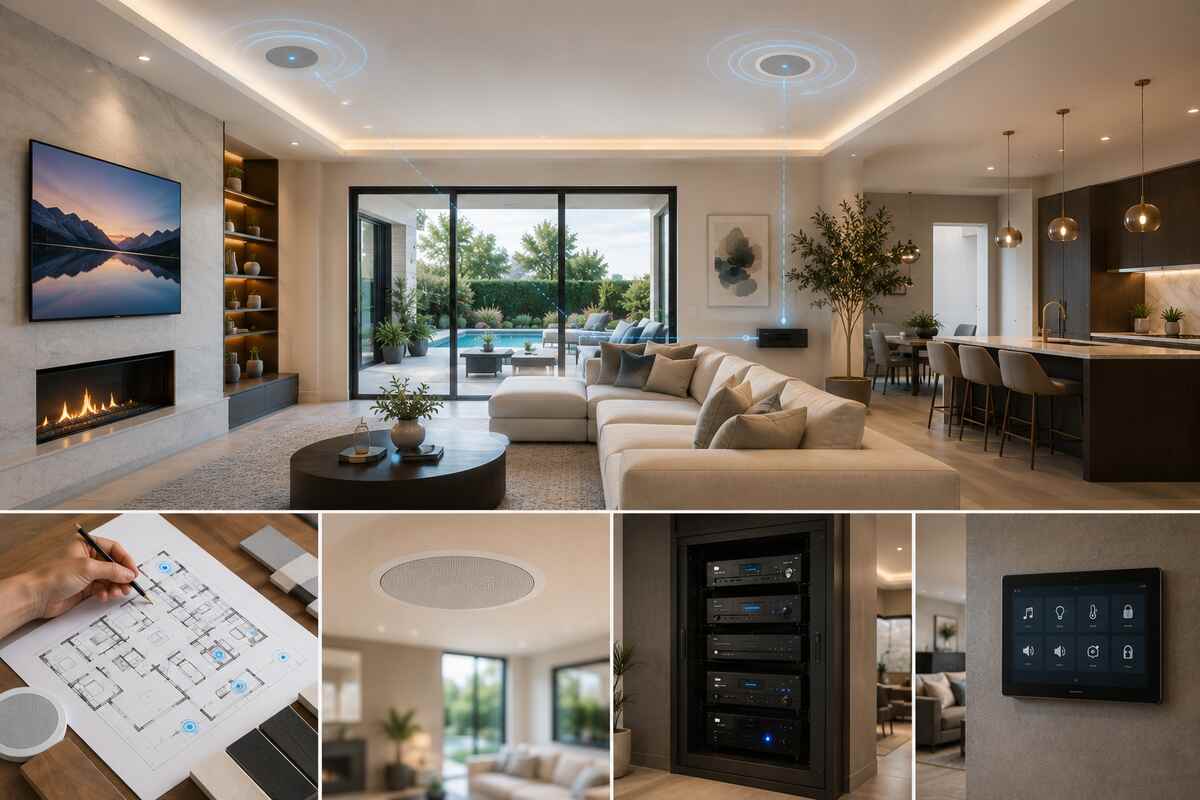
A whole home audio system is made up of several components that work together to deliver a seamless listening experience. While the technology behind the scenes can be sophisticated, each component serves a simple purpose.
Speakers
Speakers are the most visible part of the system, although many are designed to blend into the home. Depending on the space and the desired aesthetic, they may be installed in ceilings, walls, outdoors, or positioned as freestanding speakers. The right choice depends on the room's layout, listening habits, and design goals.
Amplifiers
Amplifiers provide the power that drives the speakers. In many professionally installed systems, amplifiers are housed in a centralized equipment rack, keeping living spaces free of visible electronics while allowing multiple audio zones to be managed efficiently.
Audio Sources
The source is where the music or audio content comes from. This may include streaming services such as Spotify or Apple Music, internet radio, personal music libraries, turntables, televisions, or other connected media devices. Multiple sources can often be available throughout the home.
Network Infrastructure
A reliable network is the backbone of any modern whole home audio system. Whether the system is wired, wireless, or hybrid, strong connectivity ensures smooth streaming, synchronized playback, and responsive control.
Control System
The control system brings everything together. Homeowners can select music, adjust volume, group rooms, or switch sources using a mobile app, touchscreen, remote control, keypad, or voice assistant. The goal is to make controlling the system simple, regardless of how many rooms are involved.
Individually, each component performs a specific function. Together, they create an audio system that feels effortless to use, allowing homeowners to focus on enjoying their music rather than managing the technology behind it.
Planning Audio for Every Room
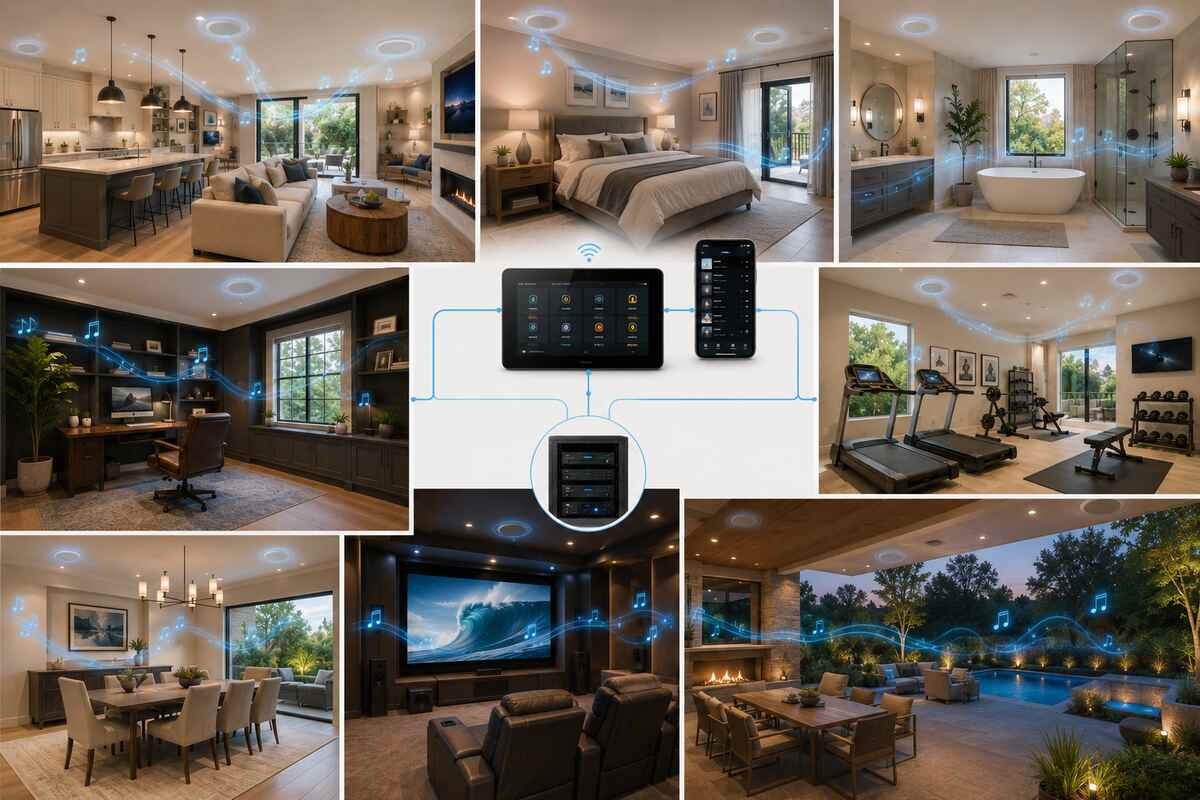
Every room has a different purpose, so every room should not be treated the same. A successful whole home audio system considers how each space is used, how people move through it, and what type of listening experience feels natural there.
Kitchens and Living Areas
Kitchens and open living spaces often need broad, even coverage rather than one strong focal point. Speakers should be positioned so music remains clear while people cook, talk, and move between connected areas without noticeable changes in volume.
Bedrooms and Bathrooms
Private spaces usually benefit from softer, more controlled sound. Independent volume settings and easy access to favorite playlists, podcasts, or calming audio can make these rooms feel more personal without disturbing the rest of the home.
Home Offices and Gyms
An office may require clear, low-distraction audio, while a home gym often needs more energy and stronger output. The speaker type, placement, and zone control should reflect those different expectations.
Dining and Entertaining Spaces
Dining rooms, lounges, and outdoor areas should support conversation while creating atmosphere. The goal is consistent background music that fills the space without becoming overpowering or forcing guests to speak over it.
Home Theaters
A home theater has different requirements from distributed audio. It is designed around focused, immersive listening, so it often uses a dedicated surround-sound system while still connecting to the broader whole home audio platform.
Outdoor Areas
Patios, pools, gardens, and outdoor kitchens require weather-resistant speakers and careful placement. Open spaces lose sound more quickly than enclosed rooms, so the design must provide balanced coverage without sending excessive volume toward neighboring properties.
The strongest systems are planned around real routines rather than room names alone. A great room used for entertaining may need a different design from one used mainly for quiet evenings. By considering purpose, acoustics, layout, and control in each zone, the system can feel consistent throughout the home without making every space sound identical.
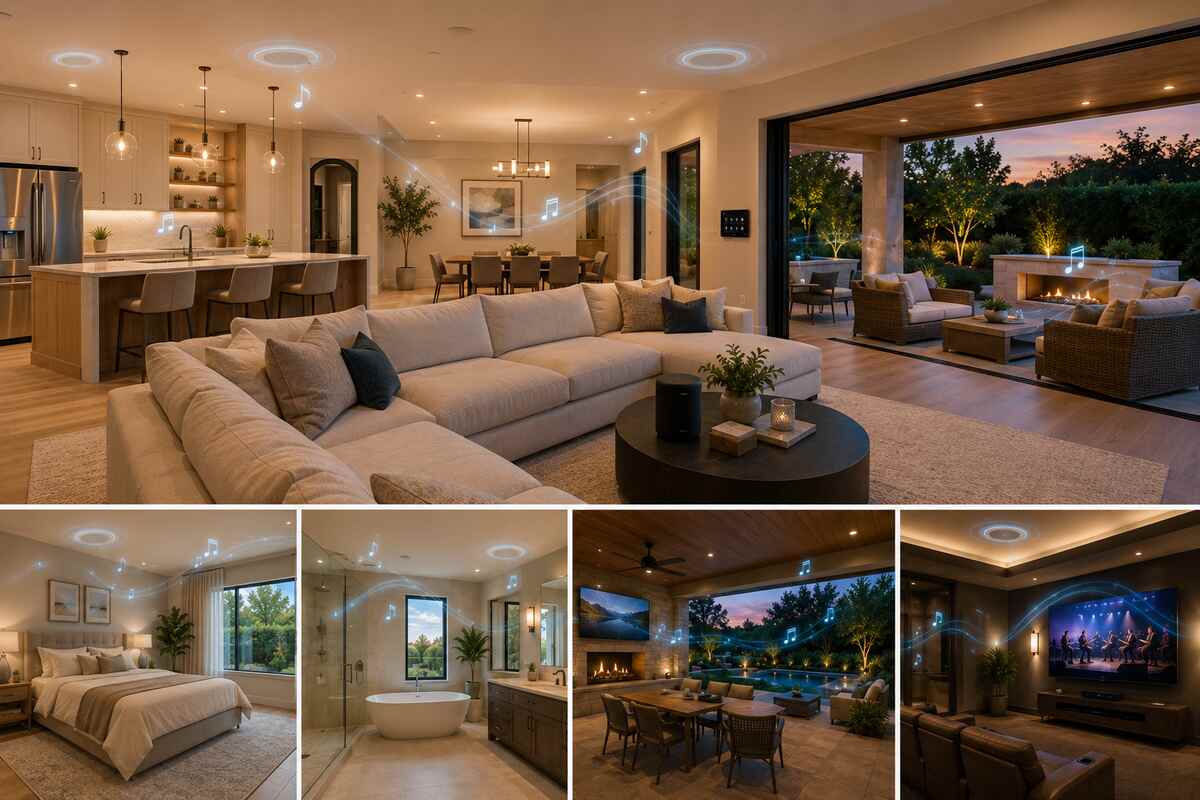
Designing for Sound Without Sacrificing Interior Design
A high-quality audio system should enhance the atmosphere of a home without competing with its architecture. For luxury interiors, that often means selecting equipment and installation methods that deliver excellent sound while remaining visually restrained.
In-ceiling and in-wall speakers can blend into surrounding surfaces using slim, paintable grilles. For spaces where even a small grille would interrupt the design, invisible speakers can be installed behind finished walls or ceilings. Freestanding speakers may still be appropriate in dedicated listening rooms, where the equipment is intentionally part of the experience.
The supporting technology can also remain out of view. Amplifiers, streaming devices, and control equipment may be organized in a centralized rack rather than placed throughout the living areas. Concealed wiring and carefully positioned controls help preserve clean lines and reduce visual clutter.
Speaker placement should never be based on appearance alone, however. Hiding a speaker in the wrong location can create uneven volume, weak coverage, or sound that feels disconnected from the room. Audio planning should therefore happen alongside architectural and interior design decisions, not after the space is complete.
The most successful result is a home where the sound is noticeable, but the technology is not. Music feels naturally present in the room without drawing attention away from the materials, furnishings, and details that define the space.
Common Mistakes People Make When Planning Whole Home Audio
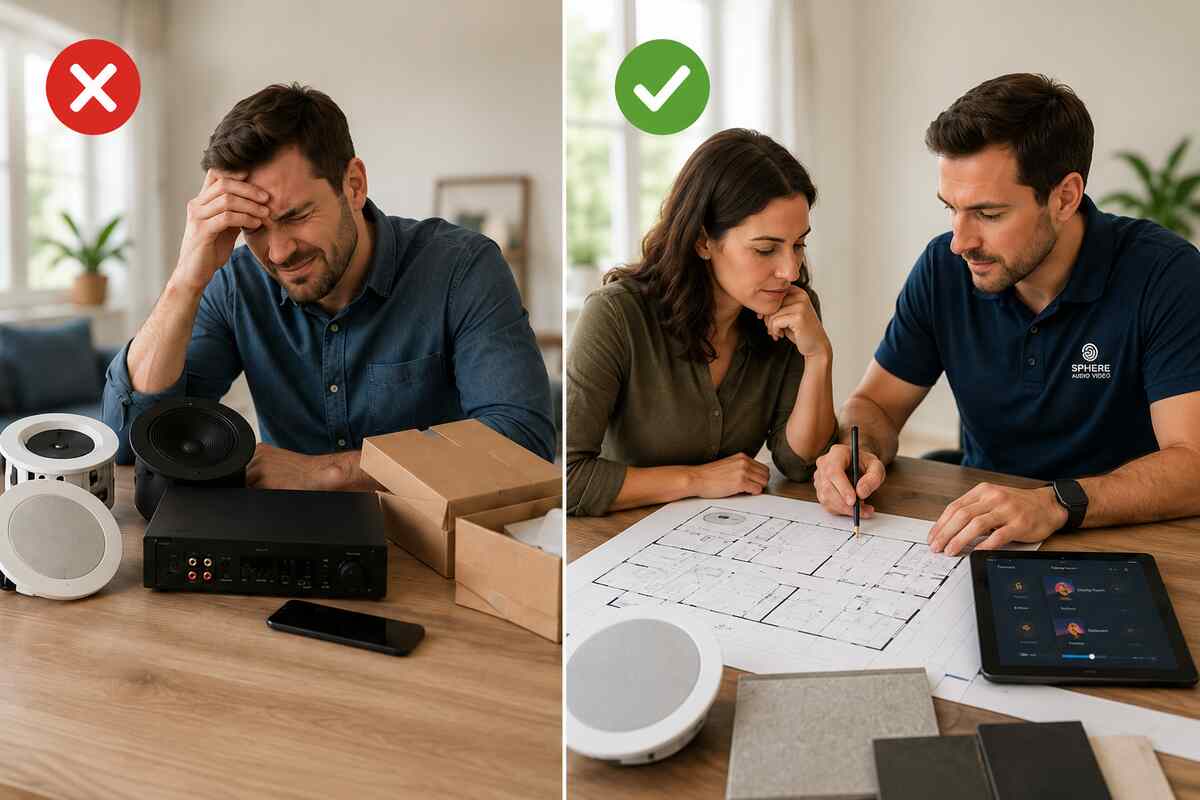
A well-designed whole home audio system begins long before the first speaker is installed. Many of the problems homeowners experience are the result of planning decisions rather than the equipment itself. Avoiding these common mistakes can lead to better sound, greater reliability, and a system that remains enjoyable for years.
Choosing Products Before Creating a Plan
One of the most common mistakes is purchasing speakers or equipment before understanding how the system will be used. Every home has different layouts, listening habits, and design priorities, so a solution that works well in one property may not be the right fit for another.
Overlooking the Home Network
Modern audio systems rely on a stable network for streaming, synchronization, and control. Weak Wi-Fi coverage or an undersized network can lead to buffering, delayed responses, and inconsistent performance, regardless of the quality of the audio equipment.
Ignoring Speaker Placement
Even premium speakers cannot perform well if they are installed in the wrong locations. Proper placement helps create balanced coverage, reduces dead spots, and ensures the system complements the way each room is used.
Failing to Plan for the Future
Many homeowners begin with a few rooms and later wish to expand the system. Planning for additional zones, outdoor spaces, or smart home integration from the beginning makes future upgrades easier and often more cost-effective.
Focusing Only on Equipment
The best whole home audio systems are not defined by the brands they use. They are defined by thoughtful design, quality installation, and how well the technology supports everyday living. A well-planned system with the right components will almost always outperform an expensive collection of products that were never designed to work together.

Let Music Become Part of the Home
A thoughtfully designed whole home audio system changes more than how music is played. It changes how the home feels—bringing energy to the morning, warmth to a gathering, and calm to the quieter parts of the day.
The strongest systems are planned around the people who will use them. Speaker placement, control, networking, room design, and future expansion should work together so the experience remains simple, reliable, and visually unobtrusive.
When those details are considered early, music no longer feels tied to a device or confined to one room. It becomes part of the home itself, moving naturally from one space to the next without demanding attention.
To experience how thoughtfully integrated audio can sound and feel, visit Sphere Audio Video at 504 Cahaba Park Circle, Birmingham, AL 35242. Explore the possibilities, discuss your home and listening preferences, and begin planning an audio system designed around the way you live.