
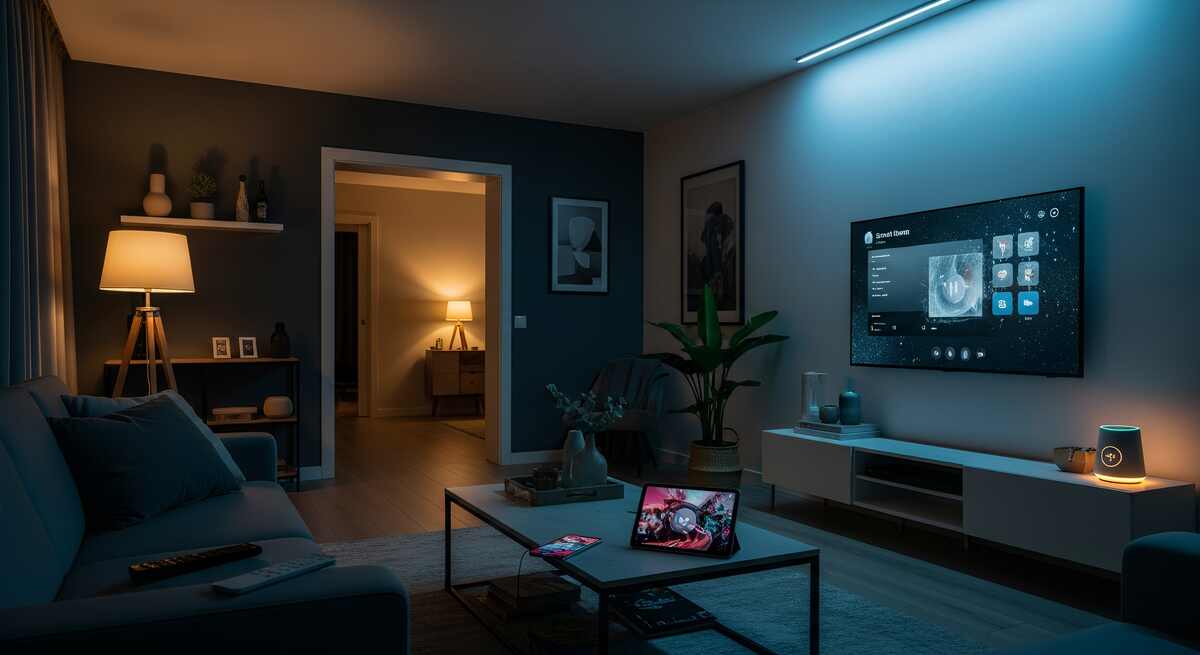
When a Smart Home Isn’t Actually That Smart
You walk into your living room, and the lights… don’t respond. You say, “Play jazz in the kitchen,” and get silence—or worse, pop music in the garage. You’ve got a half-dozen apps, three remotes, and a voice assistant that’s only useful when no one else is listening.
It’s not that your home isn’t smart. It’s that it isn’t intelligent.
Smart homes are meant to deliver more than convenience. They’re supposed to feel effortless—spaces that anticipate your needs, blend beautifully with your design, and adapt seamlessly to your lifestyle. But too often, they deliver a poor smart home experience: disjointed systems, unpredictable behavior, and a frustrating dependence on devices that should be working together.
It’s not your fault. The market is flooded with standalone gadgets, each promising “control” but offering little in the way of true smart home integration. Add to that the complexities of a large estate, multiple zones, and designer-level expectations—and what you get is a patchwork of technology that looks impressive, but falls apart in daily use.
That’s what this post is about: uncovering why even the most expensive systems can feel clunky, and what you can do to avoid the most common automation pitfalls.

The Promise of a Smart Home (And Why It Often Breaks Down)
At its core, a smart home promises ease. Imagine: the lights dim as the sun sets, music flows from room to room as you move, and the thermostat knows you’re on your way home. It’s intuitive, invisible, and indulgent.
That’s the vision homeowners are sold—and rightfully so. You’re not just investing in technology. You’re investing in comfort, time, and a heightened experience of everyday living.
But what happens when that promise dissolves the moment you start using it?
Too often, homeowners are left with a chaotic mix of systems that were never meant to work together. One app controls the shades. Another controls the lights. Your HVAC needs a separate interface. And your voice assistant? It’s guessing—sometimes poorly—what you meant to say.
What’s worse, this fragmentation doesn’t just cause frustration. It chips away at the feeling your home was meant to deliver. You notice the tech. You have to think about the tech. And that means it’s no longer serving you. You're serving it.
This is the beginning of a poor smart home experience—not because the individual components aren’t impressive, but because they lack cohesion. They weren’t designed around you. They were stacked together in isolation, without strategy, architecture, or a deep understanding of what high-end living actually demands.
And that’s where most smart homes begin to fail—not in the devices themselves, but in the absence of true, design-first smart home integration.

Smart Home Interoperability: The Silent Dealbreaker
You can buy the most advanced devices on the market. A top-tier lighting system. A high-fidelity audio solution. The latest smart thermostat. On paper, each one is cutting-edge. But if they don’t speak the same language? You don’t have a smart home. You have a negotiation.
This invisible disconnect is called smart home interoperability—the inability of different systems and devices to communicate, coordinate, and respond together in real time. And it’s the single most overlooked element in home automation.
Why is it so often ignored? Because many homeowners, and even some installers, assume that compatibility is a given. It’s not.
Big brands build within their own ecosystems—Apple, Amazon, Google, and others prioritize their platforms first. So while your smart lighting might technically connect to your voice assistant, it may not work the way you expect. The response is slow. Or the scene doesn’t trigger correctly. Or worse, it only works on some devices, in some rooms, on some days.
The result? A smart home that feels unreliable. Not because the tech is low-quality, but because the ecosystem is fractured.
In high-end properties, the stakes are even higher. There are more zones, more users, more subsystems to integrate. You don’t just need individual components that perform—you need an orchestration layer that unifies them. One interface. One logic system. One intuitive experience.
That’s what true smart home integration solves for. It ensures interoperability by design, not chance—so the technology fades into the background, and the experience takes center stage.

Home Automation Pitfalls: When Premium Doesn’t Mean Seamless
It’s easy to assume that a higher price tag guarantees a better smart home experience. Premium finishes, elite contractors, and top-shelf devices should equal a flawless system, right?
Unfortunately, many homes fall victim to automation that looks impressive but functions poorly. Why? Because true intelligence isn’t about the gear you buy—it’s about how it all comes together.
Integration as an Afterthought
In many high-end builds, smart technology is treated as a last-minute add-on rather than a foundational layer. The result is a disjointed system—flashy, yes, but far from intuitive.
Common automation pitfalls include:
Multiple control interfaces for different rooms or subsystems
Visible tech clutter that disrupts the architectural flow
Delayed or inconsistent automations, especially in larger homes
Redundant functionality, like motion sensors that override lighting scenes
Incompatibility with custom finishes (e.g., keypads that clash with design palettes)
The bigger the home, the more critical the planning becomes. Without strategic integration, the very features meant to simplify life can make daily routines feel more complicated.
When High-End Design Meets Low-End Execution
Homeowners expect elegance, ease, and reliability. But here’s the disconnect: most mass-market smart home solutions aren’t designed with architectural aesthetics or premium craftsmanship in mind.
Some overlooked issues in high-end spaces:
Technology that’s visible when it should be invisible — black boxes and blinking lights in a clean, minimal room
Audio inconsistencies across zones due to poor distributed sound planning
Security systems that feel intrusive instead of seamless
Lack of customization for unique lifestyle needs (e.g., wine cellar climate controls, outdoor lighting automation, wellness spaces)
This isn’t just a poor smart home experience. It’s a missed opportunity to deliver something remarkable.
The goal shouldn’t be stacking features; it should be about curating experiences that feel refined, intuitive, and cohesive. That level of precision only comes from a design-led approach to smart home integration—one where technology complements the home, rather than competing with it.

How Smart Homes Should Work: Principles of Proper Integration
A smart home isn’t supposed to impress you with buttons and blinking lights. It’s supposed to disappear—working quietly in the background to shape an experience that feels intuitive, personal, and beautiful.
This is the difference between tech that’s simply installed… and tech that’s masterfully integrated.
What "Intelligent" Actually Looks Like
At Sphere Audio Video, we define a truly intelligent home as one that offers:
Unified Control – One interface for lighting, audio, climate, and security. Not five different apps.
Consistent Behavior Across Spaces – Whether you're in the kitchen, poolside, or media room, the experience feels the same.
Anticipatory Design – Shades lower as the sun sets. Lights shift based on activity and time of day. You don’t control the environment—it responds to you.
Invisible Technology – Keypads that blend with the wall. Speakers that disappear into the ceiling. Cables you never see.
Design Harmony – Technology complements the home’s materials, colors, and energy—not disrupts them.
This is what smart home integration looks like when it’s led by both engineering and empathy.
Integration That Starts With the Architecture
The most successful home automation projects begin at the blueprint stage. Why? Because proper integration isn’t something you retrofit—it's something you design around:
Wiring and infrastructure are pre-planned to support future upgrades
Scenes and automation routines are mapped to daily life (not generic templates)
Lighting and audio zones are tailored to how each room is used
Interoperability testing ensures all devices work together before they’re installed
This is the difference between a home that’s truly intelligent—and one that just pretends to be.
Done right, the technology fades. The experience shines. And every day begins to feel like it was built just for you.

What to Look for in a Smart Home Integration Partner
When your home is a reflection of your lifestyle, your smart home partner needs to be more than just technically skilled. They need to understand how you live, how you entertain, and how the details of your space contribute to your sense of comfort and control.
This isn’t a job for a generalist. It’s a collaboration—with someone who thinks in systems, speaks in design, and anticipates your unspoken needs.
Key Questions to Ask Before You Commit
Whether you're building a new estate or upgrading your current smart home, here’s what to ask any integration partner:
Do you offer design consultation or just installation?
Integration should begin at the planning stage, not as an afterthought.Will all my systems be controlled from a single interface?
A true smart home isn’t five apps. It’s one seamless experience.How do you test for smart home interoperability?
Make sure they don’t just install devices, but ensure they communicate flawlessly.Can you match my home’s interior and architectural style?
Tech should elevate the design… not compete with it.What happens after the system is installed?
Ongoing service, training, and support are non-negotiables.
Why Experience in Smart Homes Matters
Having a truly “smart” home isn’t about pushing more devices. It’s about crafting a living experience that’s both intuitive and tailored.
Experienced integrators know how to:
Respect and collaborate with your designer or architect
Manage complex multi-zone and multi-structure installations
Customize control interfaces that feel personalized and elegant
Anticipate long-term needs, from future-proofing to expansion
Sphere Audio Video has worked with discerning homeowners, developers, and design professionals to deliver smart home experiences that feel as luxurious as they look. We believe technology should be invisible—but unforgettable.

The True Measure of a Smart Home
A smart home isn’t measured by how many devices you own. It’s measured by how seamlessly those systems work together, how naturally they respond to you, and how little you have to think about them. When the technology fades into the background, and your experience feels elevated, intuitive, and complete—that’s when your home is truly intelligent.
At Sphere Audio Video, we believe a smart home should never feel like work. From the moment you enter, everything should just make sense—lighting, sound, climate, security, and beyond. That’s why we build systems that are not only powerful but personal, designed specifically around how you live and what you value.
Your smart home should feel effortless. If your current system doesn’t—or you're planning a new space and want it done right from the start—we’re here to help. Call (205) 777-5626 to schedule a consultation. Let’s create a home that works in perfect harmony with your life.