
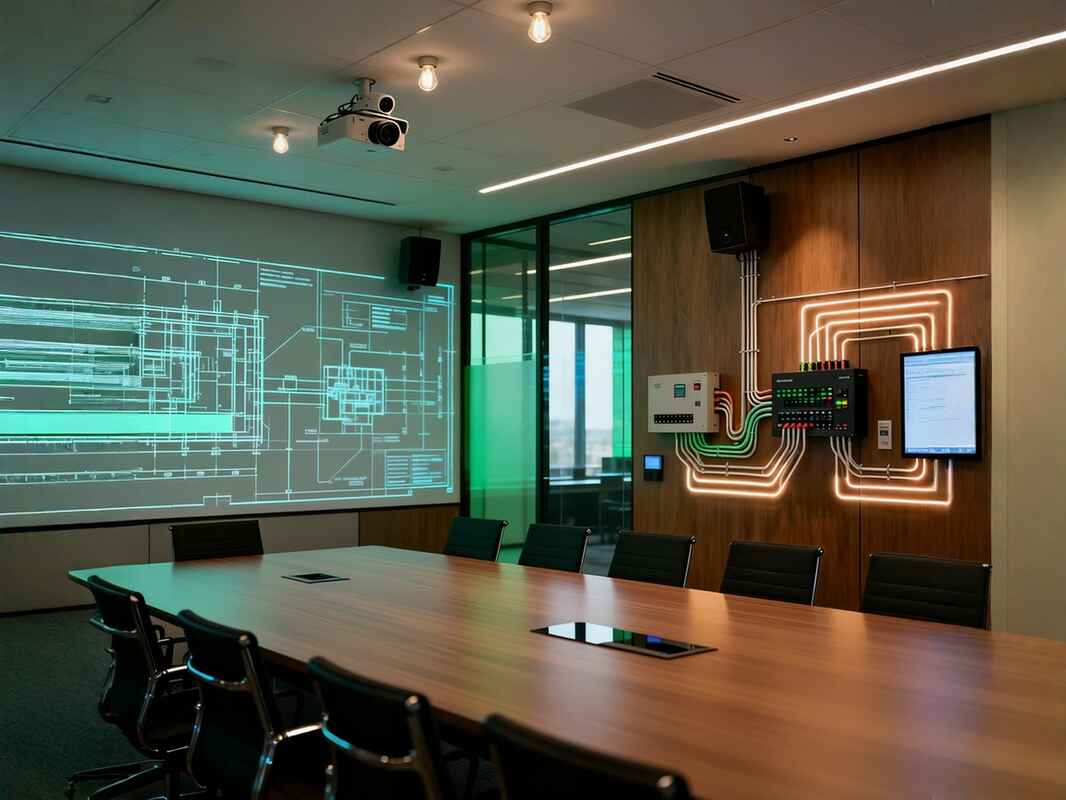
How Networked AV Systems Transform Homes and Businesses
AV networking is transforming the way we experience our environments—whether in a residence, a corporate boardroom, or a retail space. At its core, audio-video networking enables audio and visual signals to be transmitted over a digital network, creating networked AV systems that are scalable, intelligent, and deeply integrated. By relying on IP-based infrastructure instead of outdated point-to-point cabling, these systems offer a seamless blend of technology and design—functionality that feels as natural as it is advanced.
Modern spaces demand more than just entertainment—they require immersive experiences, intuitive control, and future-proof systems that elevate both form and function. From streaming ultra-high-definition video across multiple zones to managing lighting and sound with a single interface, networked AV has evolved beyond convenience. It’s become essential.
As expectations for smart environments continue to rise, especially in the commercial sectors, AV networking isn’t just a trend—it’s the foundation of modern living and working. And when designed with intention, it doesn’t just serve a space. It transforms it.

The Evolution of AV: From Traditional Wiring to Networked AV Systems
There was a time when audio-video installations meant bulky equipment closets, walls full of remotes, and miles of specialized cabling snaked behind drywall. Traditional AV systems were static, hardware-heavy, and limited in flexibility. Integrators would wire each connection point independently—video to display, audio to amplifier, source to control panel—creating a system that was functional but rigid. Any changes or expansions meant rewiring. Scaling up wasn’t just inconvenient—it was expensive.
Fast forward to today, and networked AV systems have radically shifted that landscape. By sending audio and video signals over standard IP networks, AV installations now behave more like scalable ecosystems than fixed systems. You can add a new room, display, or speaker zone with minimal disruption. You can control your entire system from a tablet or even automate it to respond to time of day, occupancy, or mood.
For homeowners, this means a single interface to orchestrate everything from the theater to the outdoor lounge. For commercial venues, it means seamless digital signage, video walls, and zone-based music across floors or departments. And for architects and designers, it means that AV no longer has to compete with aesthetics—it integrates invisibly into the architecture itself.
The shift from hardwired to networked AV is more than just technical. It’s philosophical. It represents a move from clutter to clarity, from complication to control. It’s how technology quietly disappears into the background—while enhancing everything in the foreground.

How Does Audio-Video Networking Work?
Modern spaces demand more than isolated screens and tangled cables. Whether in a residence or a high-tech commercial venue, today’s systems need to be integrated, scalable, and beautifully simple to control. This is where audio-video networking comes in—a system that uses digital infrastructure to transmit media across spaces with elegance and precision.
From Cables to Connectivity: The Fundamentals of AV Networking
Traditional AV Systems: A Physical Puzzle
In older setups, every piece of equipment—amplifiers, speakers, projectors, displays—required direct, dedicated wiring. Want to send audio from a media room to a patio? You’d need to run physical cables from the source to the destination, often across walls, ceilings, or floors. That meant limited flexibility and a high cost to modify or expand.
Networked AV Systems: Digital Ecosystems
Today’s networked AV systems operate more like smart ecosystems. Audio and video signals are converted into digital packets and routed through standard Ethernet networks—just like data on your Wi-Fi. That means one clean infrastructure can handle content for every screen and speaker in the building. You can add, move, or change elements with minimal disruption—no need to start over every time your needs evolve.
The Architecture Behind Networked AV Systems
Sources, Switches, and Endpoints
In a networked AV system, content sources (like media servers, video conferencing systems, or security feeds) are connected to encoders that digitize and transmit the content across a network switch. The signal then travels to decoders or “endpoints” that play the content on TVs, speakers, or projectors in different rooms. Every device communicates over the same network, offering complete flexibility and centralized control.
Centralized vs. Distributed Design
Sphere Audio Video often designs systems using a centralized AV rack—an elegant solution where all core equipment is housed in one location, with hidden wiring delivering media throughout the property. Alternatively, some systems are distributed, with hardware placed locally in each room. Either approach works seamlessly with AV networking, depending on the needs of the space and the vision of the architect or designer.
Real-World Applications: AV Networking in Action
In Homes
Imagine walking into your home, and with a single voice command, the lights dim, your favorite playlist starts in the kitchen, and the movie begins in the theater room—all seamlessly coordinated via AV networking. These systems integrate with lighting, security, HVAC, and shades, giving homeowners total environmental control without any visible tech clutter.
In Commercial Spaces
For hotels, restaurants, or executive offices, networked AV systems bring operational efficiency and a premium guest experience. From automated music zones in a spa to synchronized digital signage in a retail store, these systems offer reliability and real-time control from any device—no tech degree required.
The Benefits of Networked Infrastructure
Scalability and Flexibility
Once a networked AV system is in place, it can be expanded easily—add a screen, a zone, or a feature without overhauling the infrastructure. This makes it a future-proof investment that grows with your space.
Elegance Meets Performance
Networked systems allow for sleek, discreet hardware placement, with equipment hidden in cabinetry or server rooms. The aesthetic remains pristine, while the performance delivers cinematic sound, crystal-clear visuals, and real-time control.
In short, AV networking is about more than moving sound and video from one room to another. It’s about creating harmony—between technology, architecture, and the people who live or work in those spaces. It replaces complexity with confidence. And it ensures that whatever experience you’re designing—whether for comfort, impact, or efficiency—it happens effortlessly.

What Are the Benefits of Audio-Video Networking?
Whether you’re designing a residence, a premium commercial venue, or a tech-forward workspace, audio-video networking offers tangible advantages that go far beyond convenience. These systems are built for flexibility, control, and seamless integration—enhancing both form and function.
Let’s explore the benefits of AV networking across different use cases.
Benefits for Homeowners & Developers
Seamless Smart Living:
Unified control of AV, lighting, shading, and security—all from a single interface.
Automated routines tailored to lifestyle (e.g., “Movie Night” mode or “Wake Up” scene).
Voice control and mobile access offer next-level convenience.
Minimalist, Elegant Design:
Hidden speakers, wall-mounted touch panels, and clean cable management.
AV systems that disappear into the architecture, preserving aesthetic integrity.
Future-Proof Technology:
Easily upgrade components or expand zones without redoing the system.
Supports the evolving demands of real estate and resale value.
Enhanced Security and Privacy:
Integrated surveillance with discreet cameras and centralized monitoring.
Control access, lighting, and alerts remotely—at home or abroad.
Benefits for Property Owners & Business Leaders
Operational Efficiency:
Centralized control of digital signage, ambient audio, and lighting zones.
Schedule, automate, or adjust settings in real time—no IT support needed.
Elevated Customer Experience:
High-fidelity sound and dynamic visuals create a premium atmosphere.
Perfect for hotels, restaurants, executive offices, and retail.
Scalable Infrastructure:
Add new displays or audio zones without overhauling the network.
Useful for expanding businesses or properties with rotating use cases.
Improved Brand Perception:
Sleek, modern systems reinforce the look and feel of an innovative brand.
Smart tech becomes a talking point that impresses clients and guests.
Benefits for Architects & Interior Designers
Design-Integrated Technology:
Work with networked AV systems that complement, rather than compete with, interior design.
In-wall speakers, mirror TVs, and hidden racks preserve the visual harmony of your project.
Simplified Collaboration:
Partner with AV specialists who understand design priorities and building constraints.
Less time troubleshooting, more time delivering stunning results.
Future-Proof Project Value:
Recommend smart solutions that enhance the space now and in the long term.
Position yourself as a forward-thinking professional offering modern, market-ready spaces.
Universal Benefits of AV Networking
Flexibility:
Reconfigure zones, rooms, or use cases without major rewiring or redesign.
Ideal for spaces that evolve—like showrooms, multi-purpose rooms, or seasonal homes.
Reliability:
Digital signals reduce signal loss, interference, and latency.
Built-in redundancies (like failover systems) ensure consistent performance.
Control from Anywhere:
Access and manage the system remotely—from a smartphone, tablet, or control panel.
Real-time notifications and remote troubleshooting improve peace of mind.
In short, the benefits of AV networking go beyond functionality. They empower lifestyle. They elevate experience. And when designed with intention, they transform your space into something greater than the sum of its screens and speakers.

Key Components of Networked AV Systems
Behind every seamless AV experience—whether in a residence or a state-of-the-art commercial space—there’s an elegant system of interconnected technologies working in harmony. Understanding the key components of a networked AV system helps demystify how everything works, and more importantly, how it can be customized to meet your lifestyle, design aesthetic, or operational goals.
The Engine Behind the System: Encoders, Decoders, and Network Infrastructure
Every networked AV system begins with a foundation: the transmission of data. That transmission relies on three core technologies—encoders, decoders, and the network switch that connects them.
Encoders take media content from sources—such as streaming boxes, cable TV, security cameras, or digital signage players—and convert it into IP packets.
Decoders receive those packets at the destination (a TV, projector, or speaker zone) and translate them back into clean, high-fidelity audio or video.
Network switches manage the flow of data across the system, ensuring every signal reaches its endpoint without delay or degradation.
This process happens in real time, and when properly engineered, it allows for zero-latency video, distributed audio throughout a property, and synchronized displays across multiple zones. These components aren’t visible to the user—but they are essential to the system’s elegance and responsiveness.
Control Systems: Where Simplicity Meets Intelligence
One of the hallmarks of a Sphere Audio Video installation is effortless control. The days of juggling remotes, apps, and wall switches are gone. Instead, you interact with your AV system through a central control interface—intuitive, customizable, and beautifully designed.
Depending on the space, the control system may include:
Touch panels, mounted on walls or placed on tables, offer full control of lighting, sound, video, climate, and security.
Smart remotes that consolidate every device into a sleek, tactile tool.
Mobile apps that let you manage your entire property from anywhere in the world.
Voice control, integrated with assistants like Alexa, Google Assistant, or Josh AI, for truly hands-free experiences.
Behind these user interfaces is a control processor—essentially the brain of the system—programmed to respond to your preferences. Whether it’s a “Relax” scene in a private residence or a “Presentation Mode” in a boardroom, everything works in sync at the touch of a button.
Infrastructure: The Hidden Architecture of Performance
While the experience of using a networked AV system feels simple and immediate, the infrastructure behind it is carefully engineered. Professional-grade cabling, thoughtful equipment placement, and reliable power management all contribute to a system that performs flawlessly and lasts for years.
Wiring & Connectivity:
Modern AV systems often run on CAT6A or fiber optic cabling, allowing for high-speed, high-bandwidth performance.
Proper cabling ensures signal integrity across long distances and allows for future system expansions without starting from scratch.
Equipment Racks:
All core AV equipment—encoders, processors, amplifiers, media servers—is typically stored in a centralized equipment rack.
These racks are placed in discreet locations (like utility rooms or closets), keeping technology out of sight while maintaining easy access for updates or service.
Power Conditioning:
Clean, consistent power is essential for AV systems. That’s why we integrate surge protection and power management into every project.
This protects sensitive gear from damage and reduces long-term maintenance issues.
Ultimately, the components of a networked AV system aren’t about overwhelming users with tech. They're about delivering a silent sophistication—a system that simply works, whether you're hosting a dinner party, running a board meeting, or streaming music through the garden. Each element is chosen not just for performance, but for harmony, both with your space and your lifestyle.

Understanding Networked AV Protocols
For many homeowners, business owners, and even design professionals, the idea of “protocols” can sound overly technical. But here’s the truth: networked AV protocols are simply the rules and formats that allow your devices to communicate reliably, quickly, and in sync. And understanding the basics can help you make smarter decisions about your system’s capabilities and longevity—without needing a background in IT.
Let’s break it down in plain language.
Key Networked AV Protocols You Should Know
While there are dozens of protocols in the AV world, a few have become industry standards—particularly in environments where performance, aesthetics, and flexibility matter most.
Dante (Digital Audio Network Through Ethernet)
Used in homes, theaters, and commercial installations for audio distribution.
Sends hundreds of channels of audio over a single Ethernet cable with near-zero latency.
Allows flexible routing, zone-based control, and clean installation—no need for analog audio wiring.
Perfect for properties that want crisp, high-fidelity audio in every room or venue.
AVB (Audio Video Bridging)
A time-sensitive networking protocol that ensures both audio and video signals arrive on time and in sync.
Offers excellent reliability for larger or more complex installations—especially when precise timing is required.
Common in boardrooms, conference centers, and performance venues.
SDVoE and IPMX (Emerging Video Standards)
Designed for ultra-high-definition video distribution over IP networks—think 4K and beyond.
Support uncompressed video transmission with minimal latency, ideal for home theaters or large-scale digital signage.
IPMX (Internet Protocol Media Experience) is an open standard being adopted across the pro AV industry, ensuring future compatibility.
Each of these protocols supports different use cases. The key is selecting a system that not only meets today’s performance needs but can evolve with your space over time.
Protocols and Performance: What to Expect
When your AV system uses the right protocols, the difference is immediate:
No lag between sound and image
Clean transitions between zones or rooms
Instant response when using touch panels or voice control
Seamless integration with lighting, automation, and security systems
And most importantly: you never have to think about what’s happening behind the scenes. The system just works.

Common Misconceptions About AV Networking
As AV networking becomes more widely adopted across homes and commercial spaces, so do the myths and misconceptions. For many people—especially those unfamiliar with how networked AV systems work—the idea of an “intelligent,” integrated environment can feel complex, expensive, or unnecessary.
Let’s set the record straight by addressing some of the most common misunderstandings and why they no longer apply in the modern world of smart design and seamless technology.
“It’s Too Complicated for Me (or My Staff) to Use”
This is perhaps the most common concern, especially among homeowners or business owners who have struggled with clunky remotes or confusing setups in the past.
Reality:
Modern networked AV systems are designed for simplicity, not complexity.
Custom control interfaces are built around how you use your space.
One-touch scenes like “Entertain,” “Work,” or “Goodnight” remove the guesswork.
Systems are professionally programmed to ensure intuitive navigation, even for guests or employees unfamiliar with the technology.
If you can use a smartphone, you can use a well-designed AV system.
“It Will Ruin the Aesthetic of My Space”
This concern is especially common among architects, designers, and homeowners who value clean, minimalist interiors. And with good reason—no one wants wires, black boxes, or bulky speakers disrupting a carefully curated space.
Reality:
Today’s AV technology blends into the background—or disappears entirely.
In-wall and in-ceiling speakers are virtually invisible.
Screens can be hidden in cabinetry or disguised as mirrors or art.
Centralized AV racks eliminate clutter by removing tech from living spaces.
Even wall controls can be designed to match your décor, using custom finishes and discreet placements.
AV no longer has to compete with great design—it can complement and even elevate it.
“My Wi-Fi Isn’t Strong Enough for All This”
Many clients assume that if their current Wi-Fi struggles with video calls or streaming, adding a full AV system will only make things worse.
Reality:
While AV systems can operate over Wi-Fi, professionally designed networked AV systems are typically hardwired through dedicated Ethernet connections.
This ensures speed, stability, and zero lag—regardless of the Wi-Fi performance in the rest of the home or building.
For areas where wireless is needed, we deploy enterprise-grade wireless systems with access points strategically placed throughout the property.
You’re not relying on a standard “home router” to run an advanced ecosystem. You’re getting infrastructure built for performance.
In fact, a properly installed AV system can often improve your network’s reliability.
“It’s Only for Tech-Savvy People or Big Businesses”
AV networking is often associated with corporate campuses, hotels, or tech-heavy smart homes. Some believe it’s too much for the average homeowner or boutique business.
Reality:
AV networking is scalable and customizable to fit any space—large or small.
Want whole-home audio and a single media room? Done.
Need a restaurant setup with just four zones? No problem.
Starting with one room now, but expanding later? Easy.
The point of AV networking isn’t to complicate your space. It’s to make it easier to live and work on your terms.
“It’s Going to Be Obsolete in a Few Years”
Technology moves fast, and it’s fair to worry that today’s investment might not hold up tomorrow.
Reality:
One of the key benefits of AV networking is its flexibility and future-proof design.
Components can be replaced or upgraded without rewiring or starting from scratch.
Modular systems mean you can scale up or down as needs change.
Emerging protocols (like IPMX) are already being supported in today’s designs to keep your system ahead of the curve.
With the right integrator, your system evolves with you.
At Sphere Audio Video, we believe smart technology should be invisible when it needs to be—and empowering when you want it. AV networking doesn’t have to be overwhelming, obtrusive, or over-the-top. It just has to be done right.

How to Plan an AV Networking Project for Your Property
Whether you’re building a home, renovating a commercial space, or redesigning a boutique hotel, an AV networking system can add lasting value, beauty, and functionality. But the difference between a system that feels magical and one that causes frustration lies in the planning.
Here’s how to approach an AV project the right way—so that every screen, speaker, and control point feels like it’s always belonged.
Start Early—Ideally at the Design Phase
The most successful networked AV systems are integrated during the early stages of construction or renovation.
Why early planning matters:
It ensures clean cable pathways and avoids expensive retrofits later.
It allows architects and designers to coordinate aesthetics with technology (e.g., hidden speakers, flush-mounted panels).
It enables seamless integration with other smart systems—lighting, shades, HVAC, and security.
Even if your project is already underway or completed, it’s not too late—but starting early gives you the most freedom and efficiency.
Define Your Vision and Use Cases
A tailored AV system starts with your lifestyle or business goals. Instead of asking, “What tech do I need?”, ask:
What do I want to experience?
Music in the garden while entertaining?
Multi-zone digital signage in a retail space?
A single interface to manage everything from lighting to surveillance?
Who will be using the system?
Family members?
Staff and managers?
Guests or clients?
By identifying how you want the system to work, we can reverse-engineer the technology to fit you—not the other way around.
Choose the Right AV Partner
AV networking is not a plug-and-play process. It requires technical skill, a deep understanding of user experience, and an eye for design.
Look for a partner who:
Specializes in networked AV systems for residential or commercial projects.
Offers consultation, design, installation, and post-project support.
Understands architecture, interior design, and how to protect the aesthetic vision of a space.
Can future-proof your investment by recommending scalable systems and proven networked AV protocols.
Sphere Audio Video, for example, acts as both a design consultant and a technology integrator—ensuring the final experience is flawless, personalized, and timeless.
Future-Proof Your Infrastructure
Even if you don’t need every feature right now, it's smart to plan for growth.
We recommend:
Running extra network cabling during construction for future expansions.
Choosing modular systems that can evolve as your needs change.
Installing enterprise-grade network switches and control processors that can handle tomorrow’s tech as easily as today’s.
Think of it like building a road. You might only drive a few blocks today, but you’ll want that road to take you further when you're ready.
Understand the Lifecycle: It Doesn’t End at Installation
AV systems—especially networked ones—aren’t “set it and forget it.” Like any well-designed system, they benefit from regular updates, proactive support, and the occasional refresh.
Look for an AV partner that offers:
Ongoing maintenance plans
Remote monitoring and troubleshooting
Periodic system audits and upgrades
On-call support for new device integrations
With the right care, your AV system becomes a lasting part of your lifestyle or business—not just another piece of tech to manage.
In short, planning your AV networking project is about more than gear. It’s about designing an experience—one that matches your taste, enhances your daily life, and sets your space apart. Done right, it becomes invisible. All you see is ease, elegance, and control.

Why Sphere Audio Video Is Trusted for Elite Networked AV Installations
In the world of networked AV systems, technology alone doesn’t define the experience—execution does. And for clients who expect more than “just working,” Sphere Audio Video has earned a reputation for delivering systems that are seamless, beautiful, and built to last.
From homes in gated communities to commercial spaces and bespoke architectural projects, our work is about more than wiring and screens. It’s about helping people feel at home in their environment—with technology that enhances, not overwhelms.
We Understand That Experience Is Everything
Our team doesn’t just install AV gear—we design immersive environments. Whether it’s an intimate listening room, a rooftop entertainment deck, or a multi-floor digital signage system, we approach every project from the perspective of the end user.
You’ll feel the difference in:
Intuitive interfaces that actually make sense
Lighting, audio, and visuals that adjust to your lifestyle or business flow
Discreet design that respects the elegance of your space
When clients say their AV system “just works,” that’s not an accident. It’s by design.
We Collaborate with Your Vision, Not Against It
Sphere Audio Video works closely with:
Architects who want to preserve clean lines and spatial intent
Interior designers who demand harmony between technology and décor
Property developers who prioritize ROI, future-proofing, and market appeal
Business owners who value systems that improve ambiance, security, and customer experience
We tailor every AV networking solution to fit the project's personality—not force it into a template. That means thoughtful equipment placement, invisible cabling, and flexible infrastructure that supports long-term evolution.
We Engineer for Longevity, Not Just the Launch
The true test of a system isn’t how it performs the day it’s installed—it’s how it performs three years later.
That’s why we:
Use commercial-grade components that outperform consumer products
Design networked AV systems with scalability in mind
Stay current on the latest networked AV protocols and emerging standards
Provide remote monitoring, maintenance, and on-call service for peace of mind
Clients choose us not just for how their system looks, but for how it continues to perform—with quiet confidence, day in and day out.
We Speak Luxury, Functionality, and Tech—Fluently
It’s rare to find a team that understands all three. But that’s exactly where Sphere Audio Video thrives.
We speak the language of premium design.
We understand the flow of family life and business operations.
And we know how to translate those needs into systems that disappear into your daily experience—until you need them.
When we say “seamless AV networking,” we mean it. No drama. No tech confusion. Just comfort, beauty, and complete control.
Trust is earned. And for Sphere AV, trust is built on decades of refinement, innovation, and high-touch service. That’s why our clients return—not just for new projects, but for long-term partnerships.

Conclusion
Audio-video networking is no longer a luxury reserved for large corporations or ultra-modern homes—it’s the new standard for anyone who values simplicity, flexibility, and seamless design. Whether you're a homeowner seeking effortless control of your environment, a business owner elevating your brand experience, or a designer bringing bold, integrated visions to life, networked AV systems deliver the performance and elegance that modern spaces demand. From scalable infrastructure and intuitive interfaces to hidden hardware and future-ready protocols, the benefits of AV networking are as practical as they are inspiring.
At Sphere Audio Video, we don’t just build systems—we shape experiences. We believe technology should never feel like an intrusion. It should feel like the space was always meant to work this way. If you're ready to explore how AV networking can transform your home, business, or design project, we invite you to connect with us. Visit Sphere Audio Video at 504 Cahaba Park Circle, Birmingham, AL 35242, or call us at (205) 777-5626 to schedule a private consultation. Let’s bring your vision to life—with technology that disappears, and experiences that stay with you.